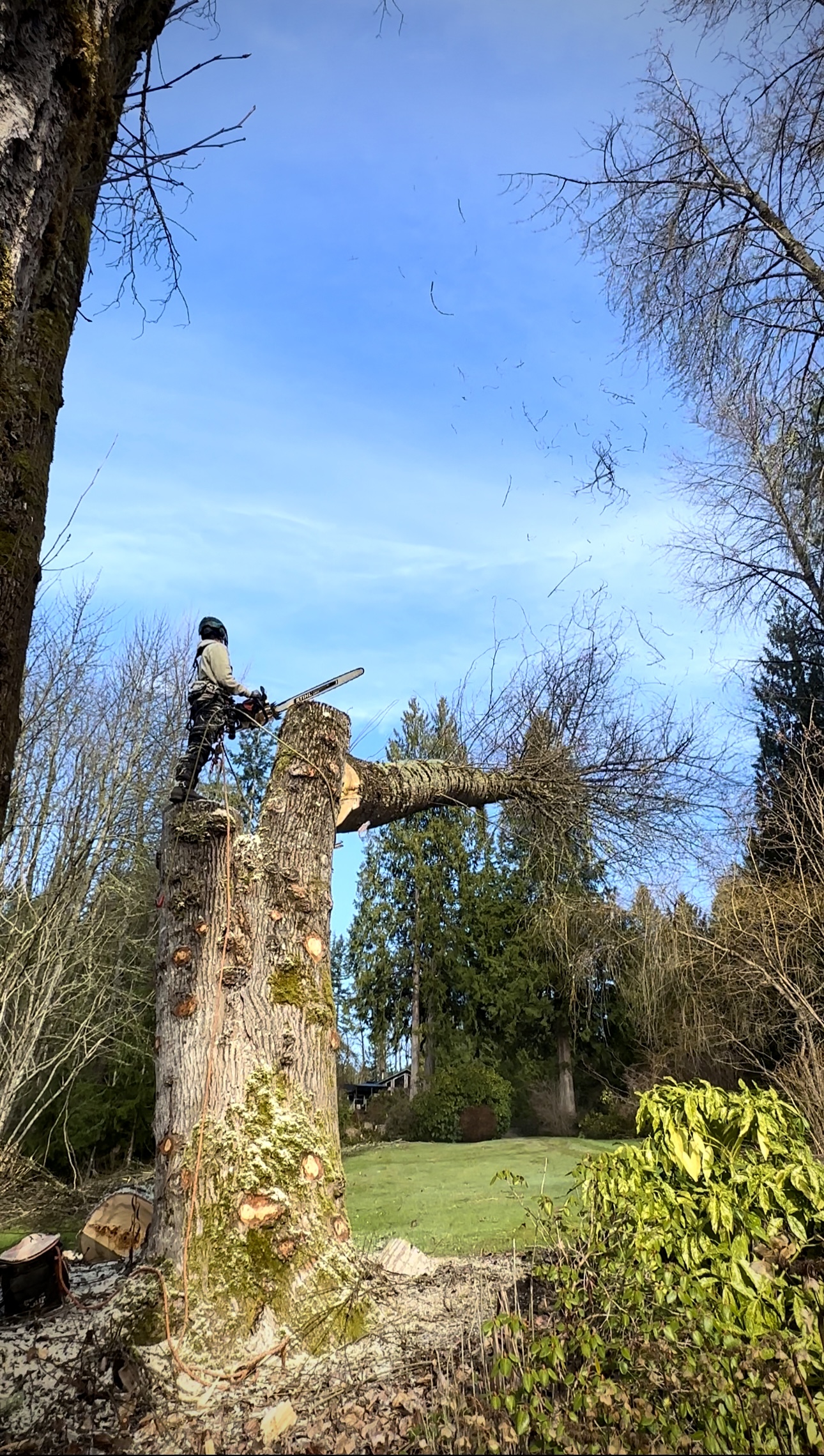
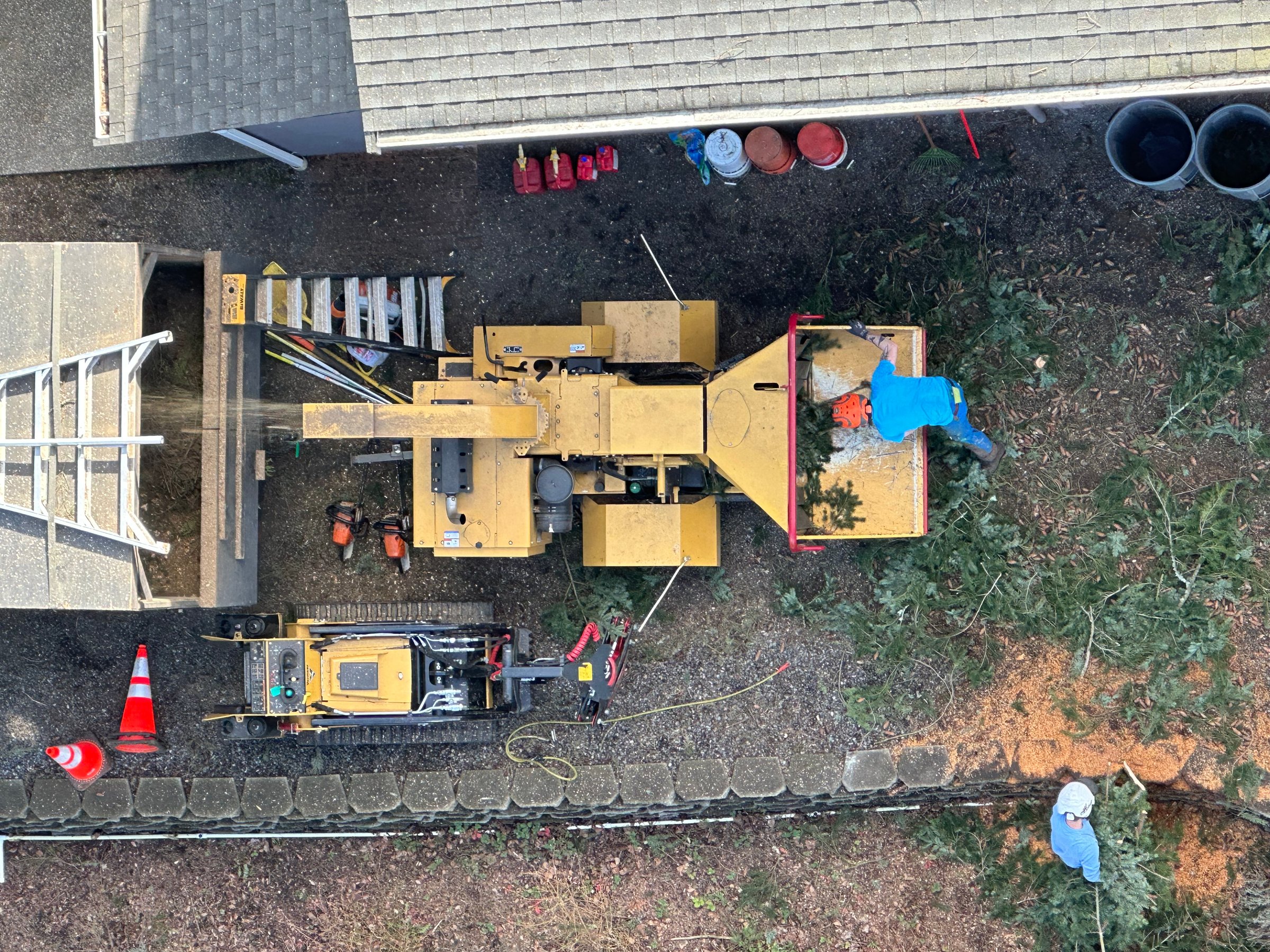
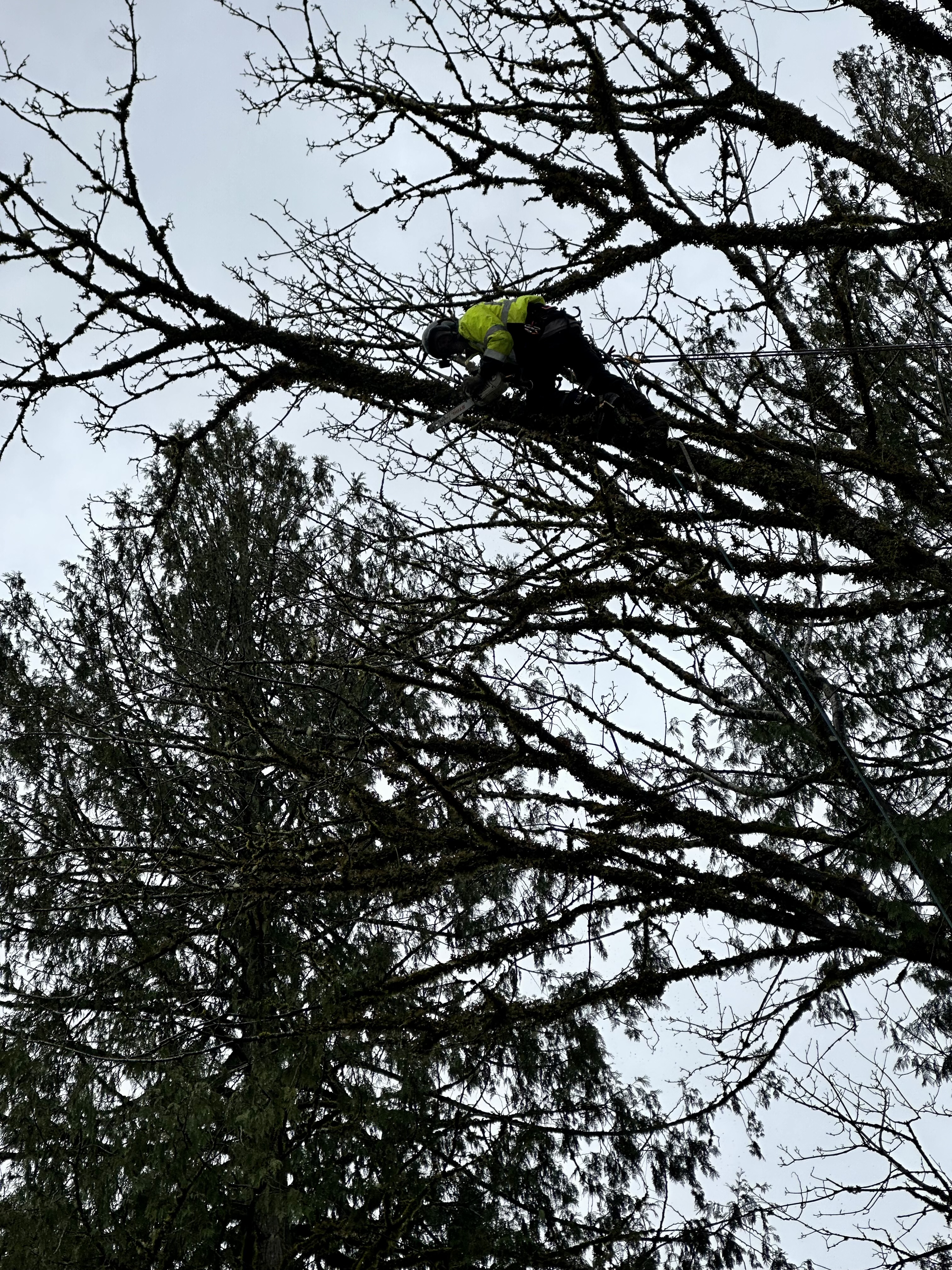
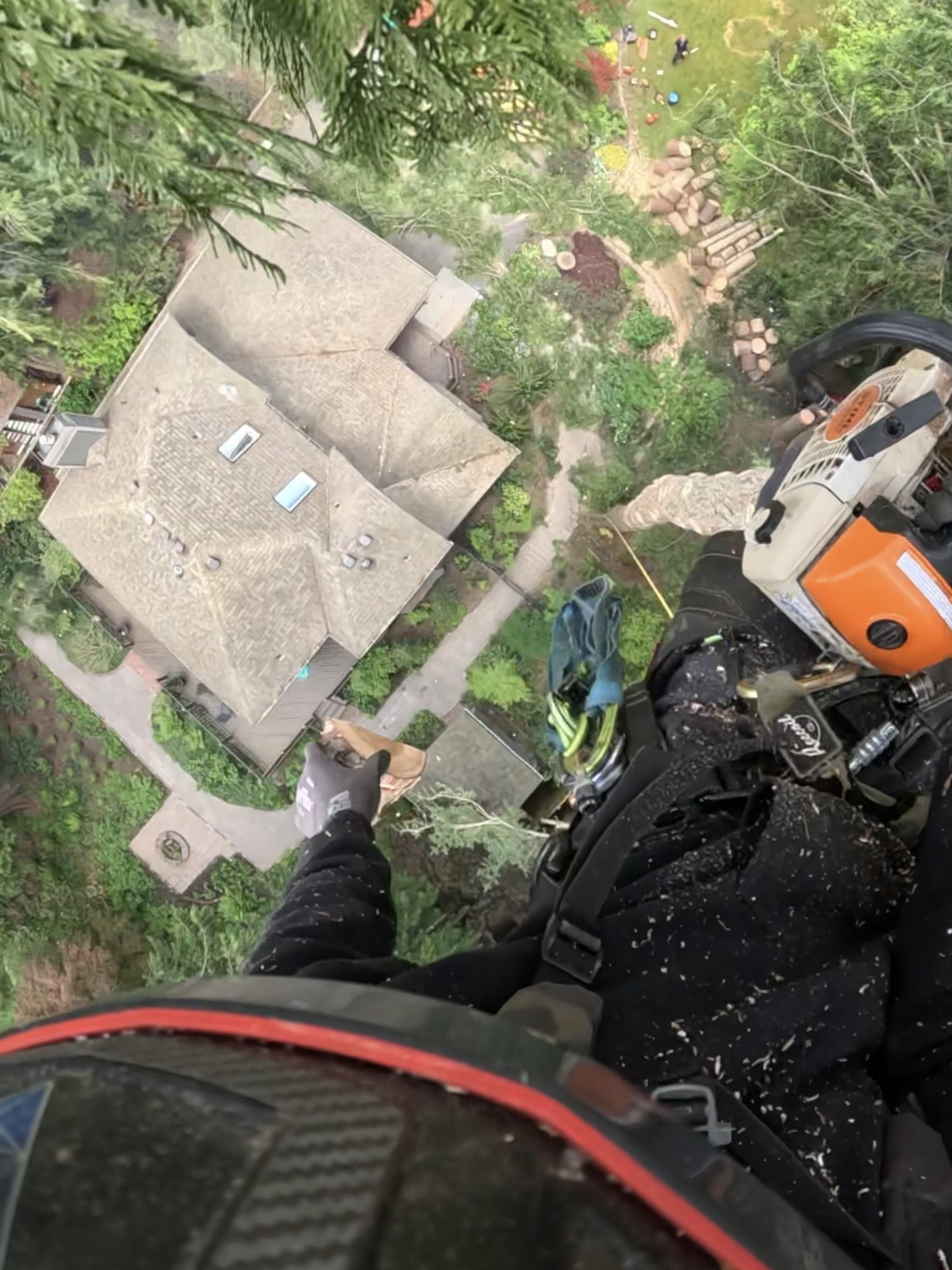
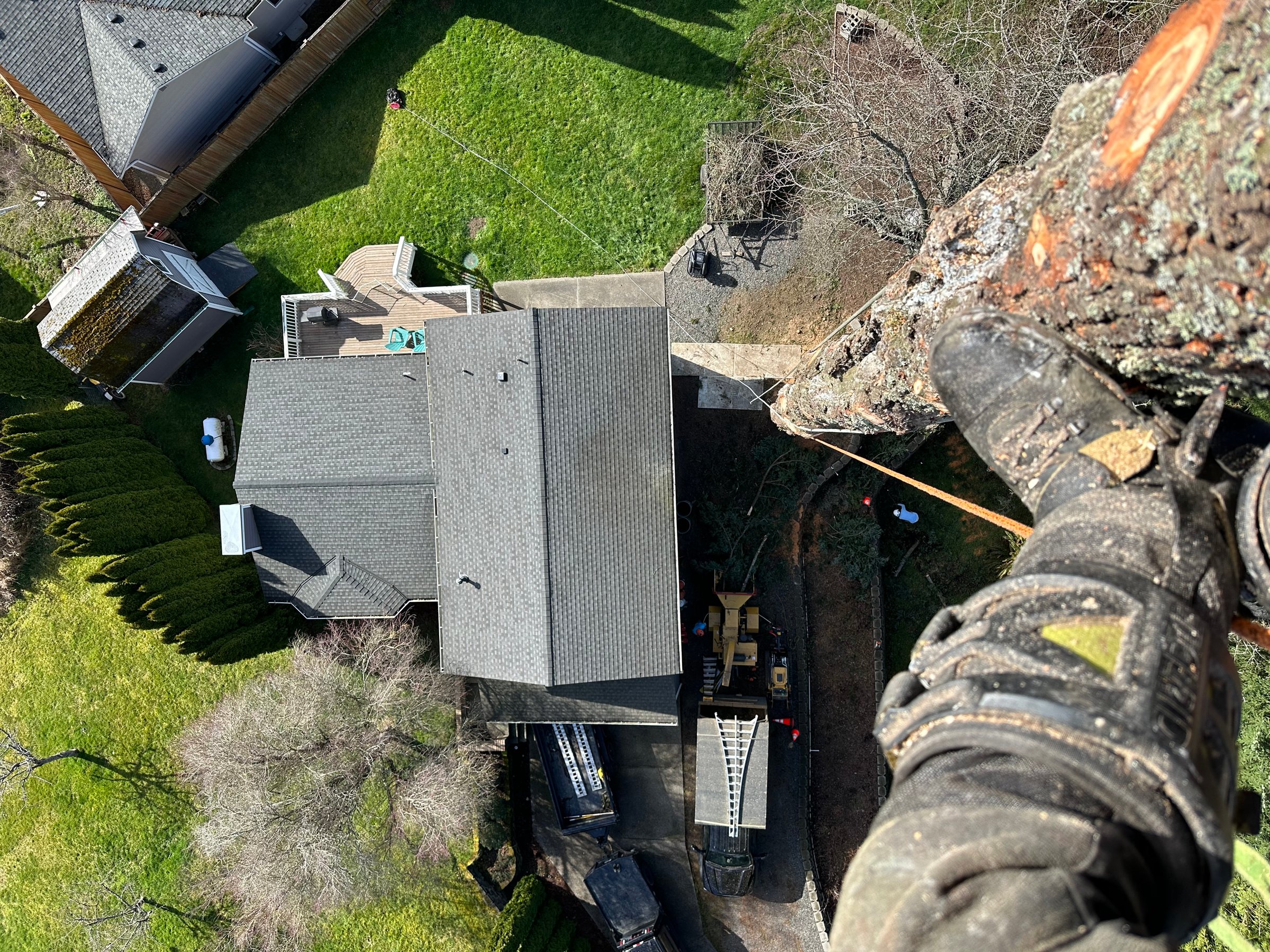
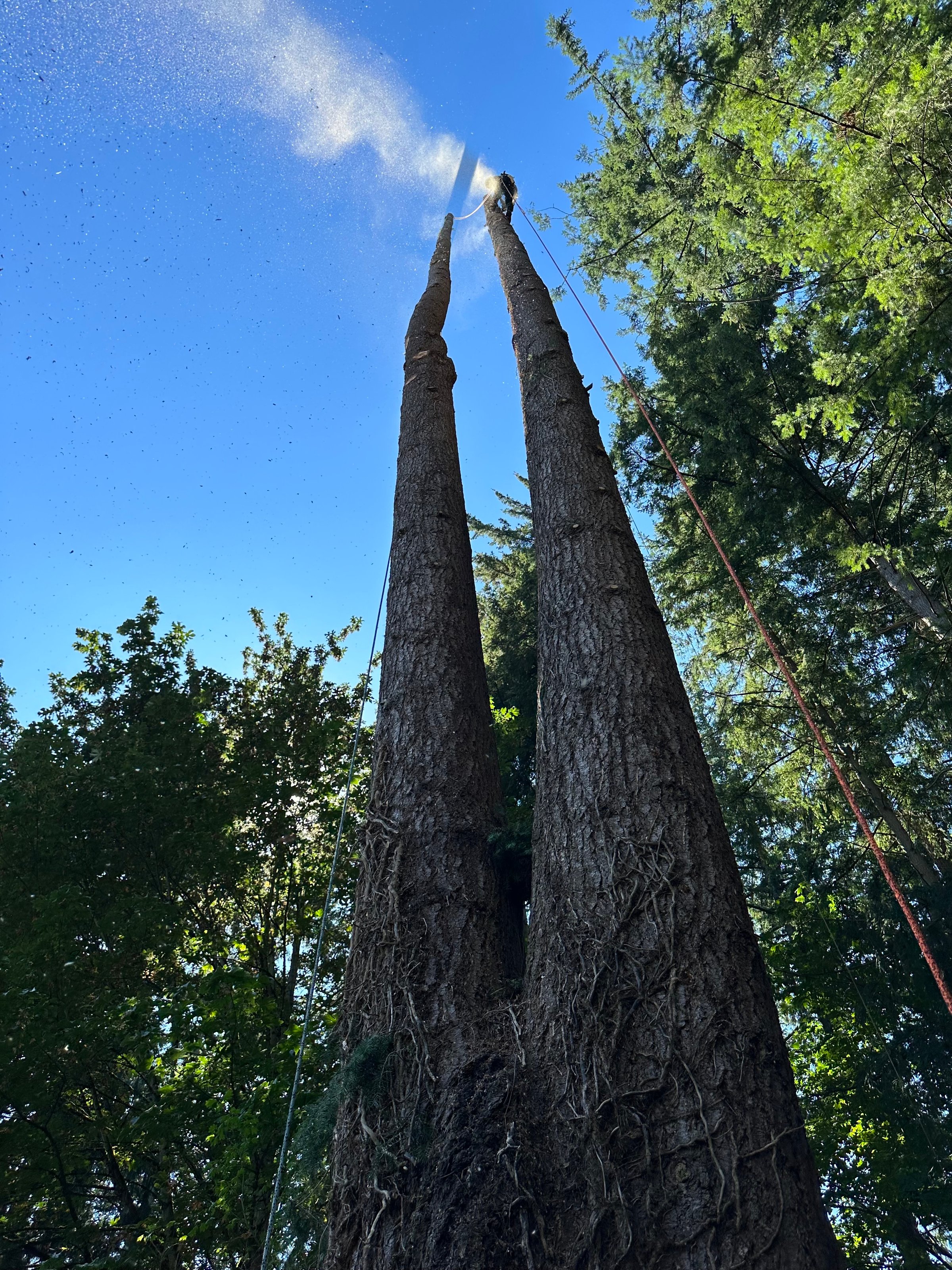
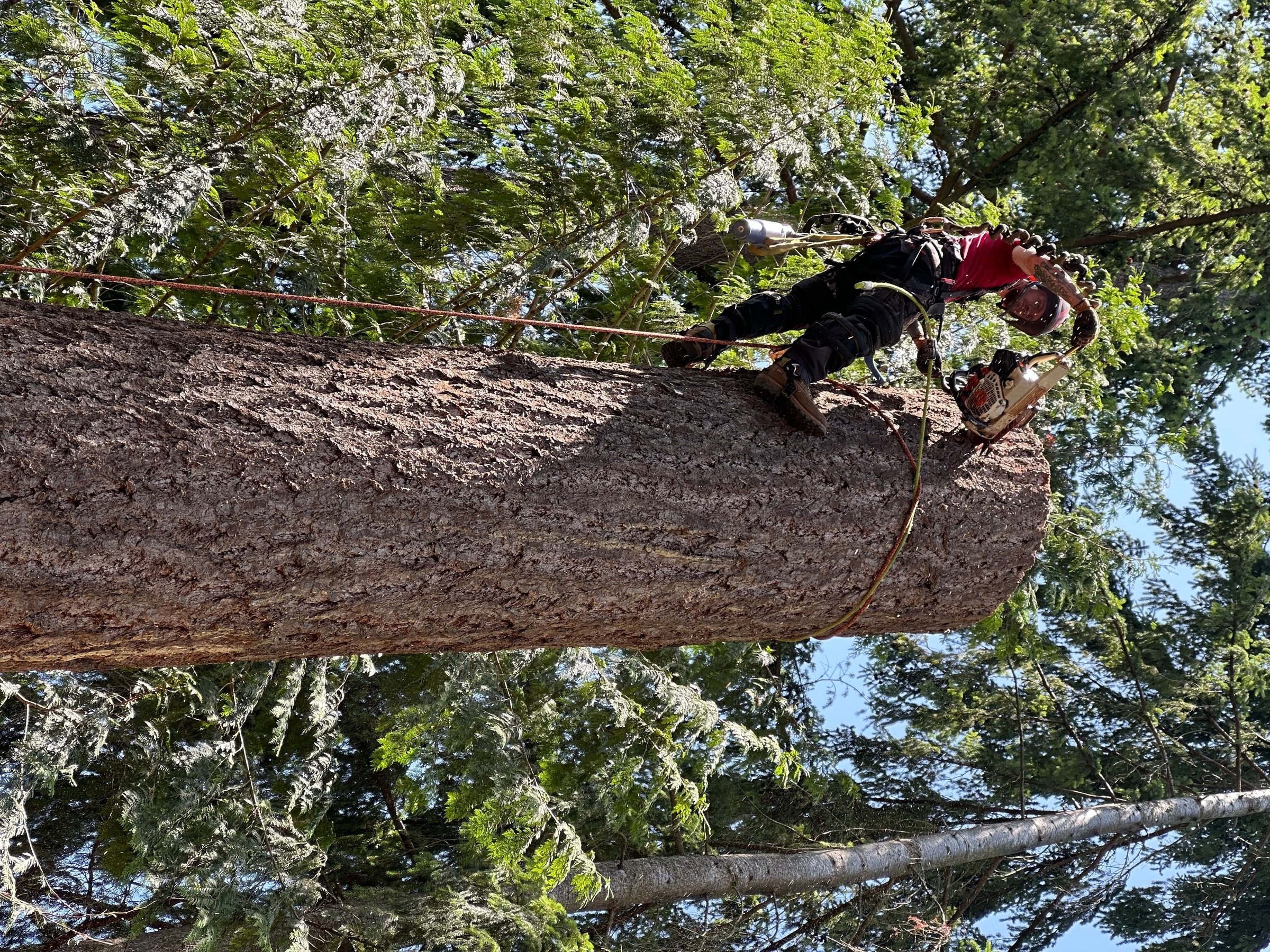
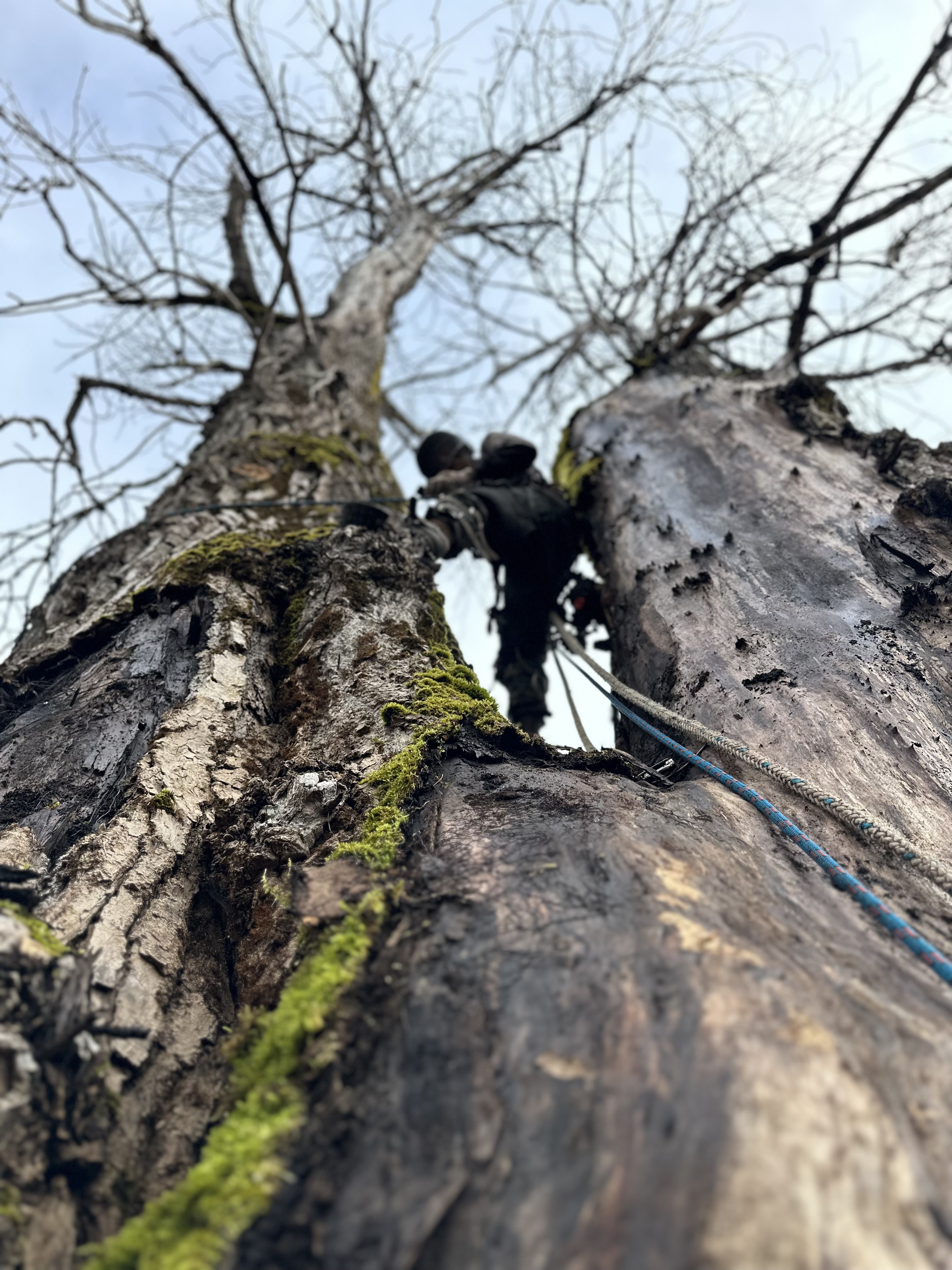
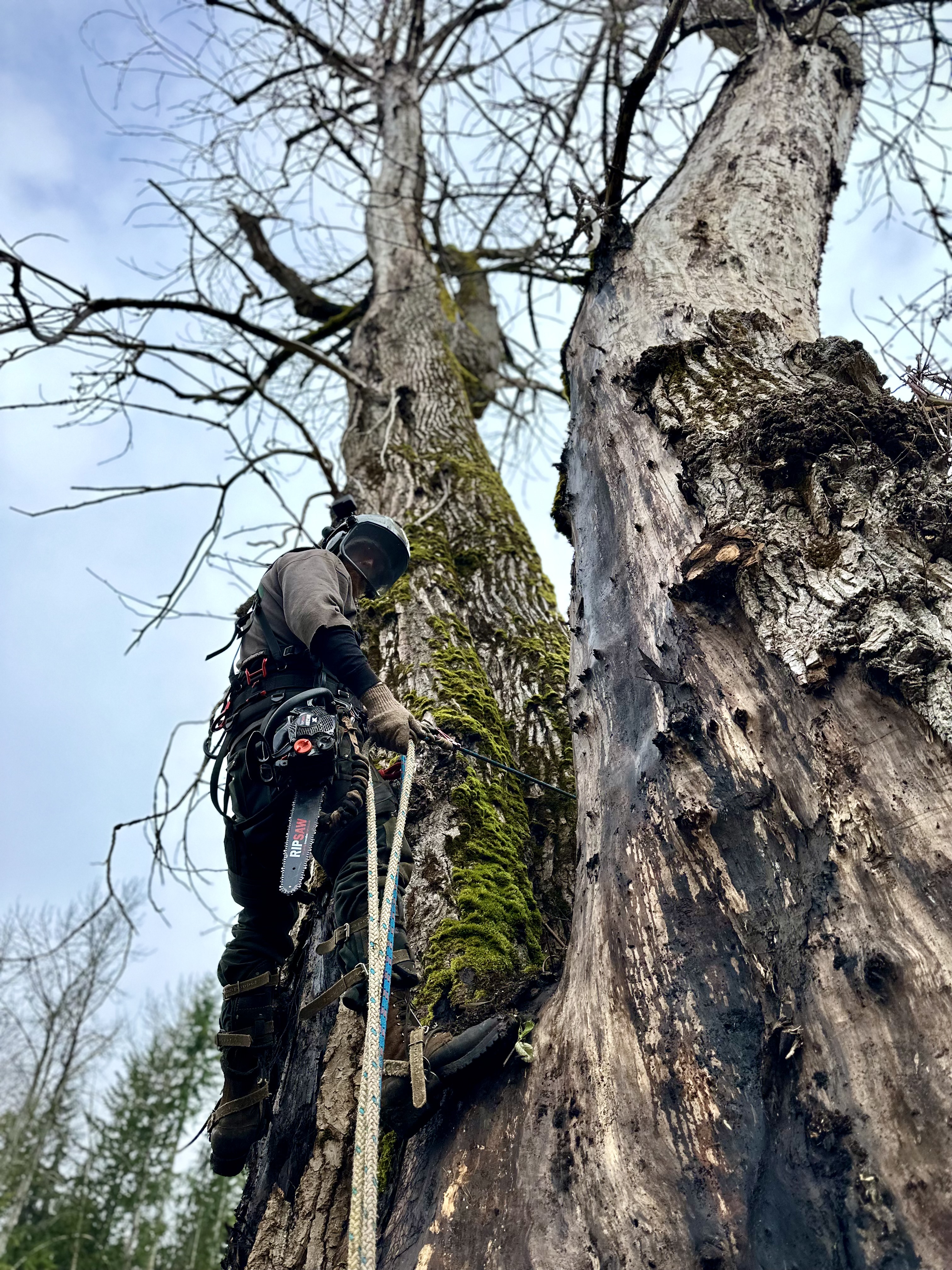
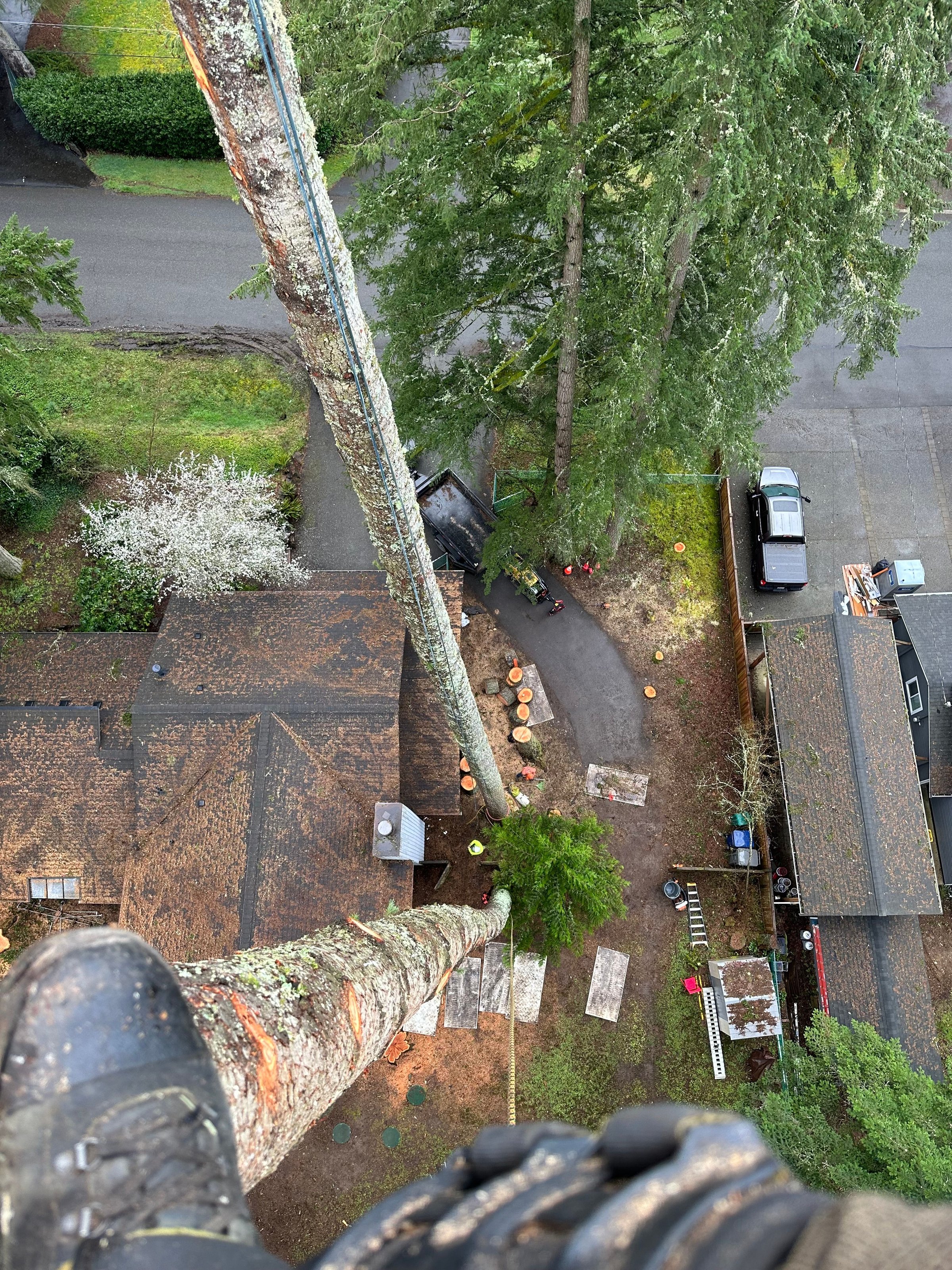
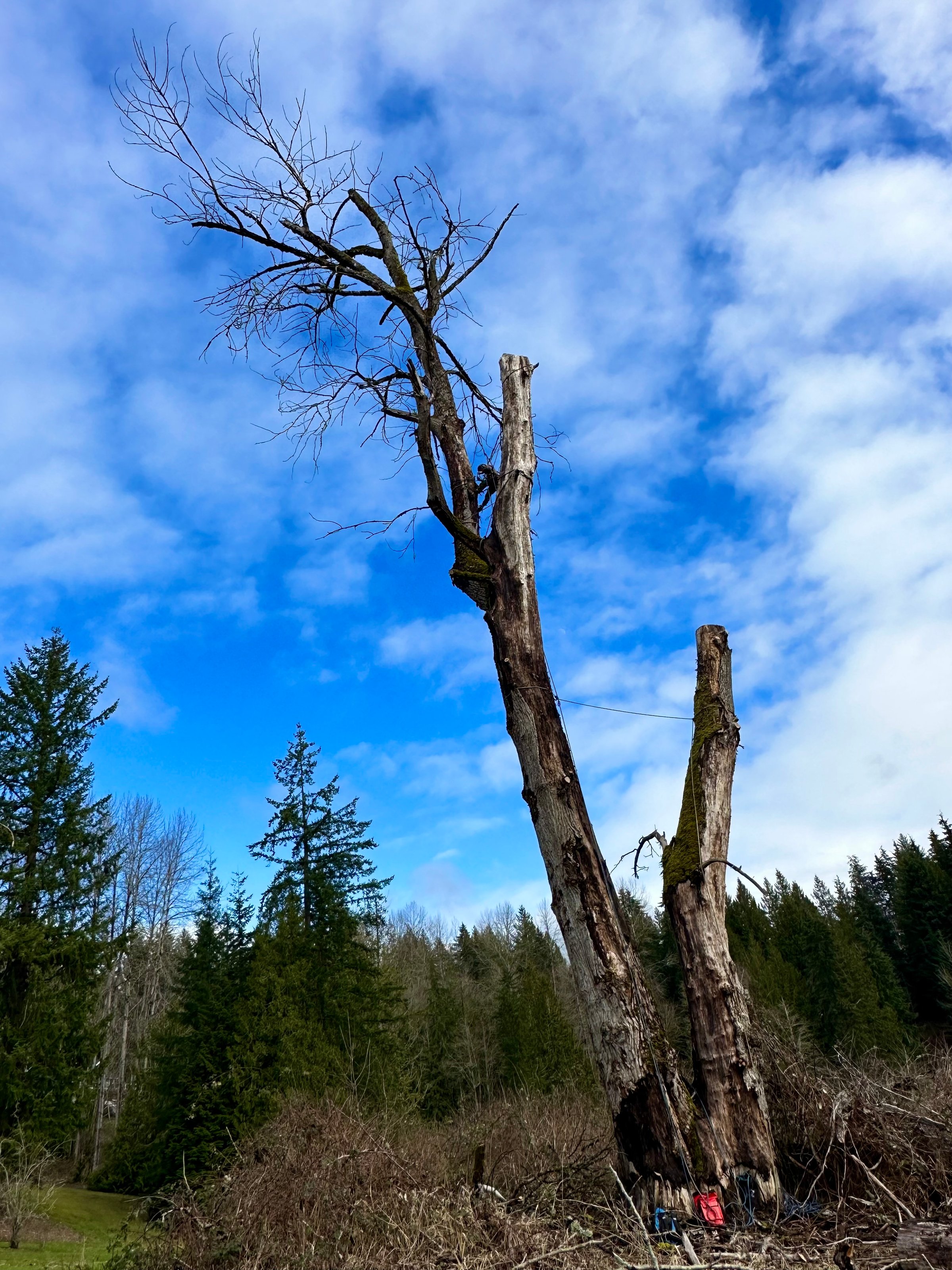
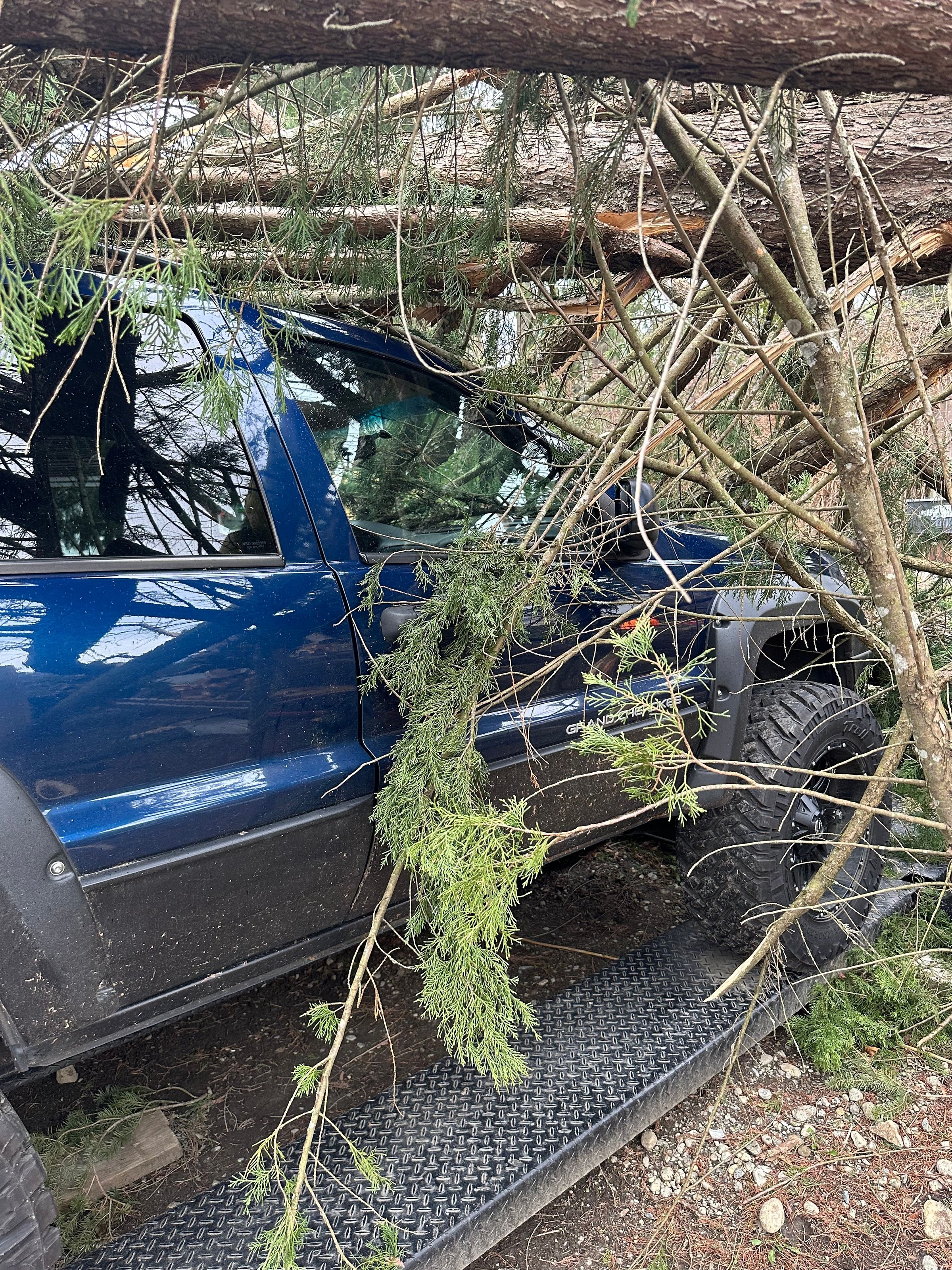
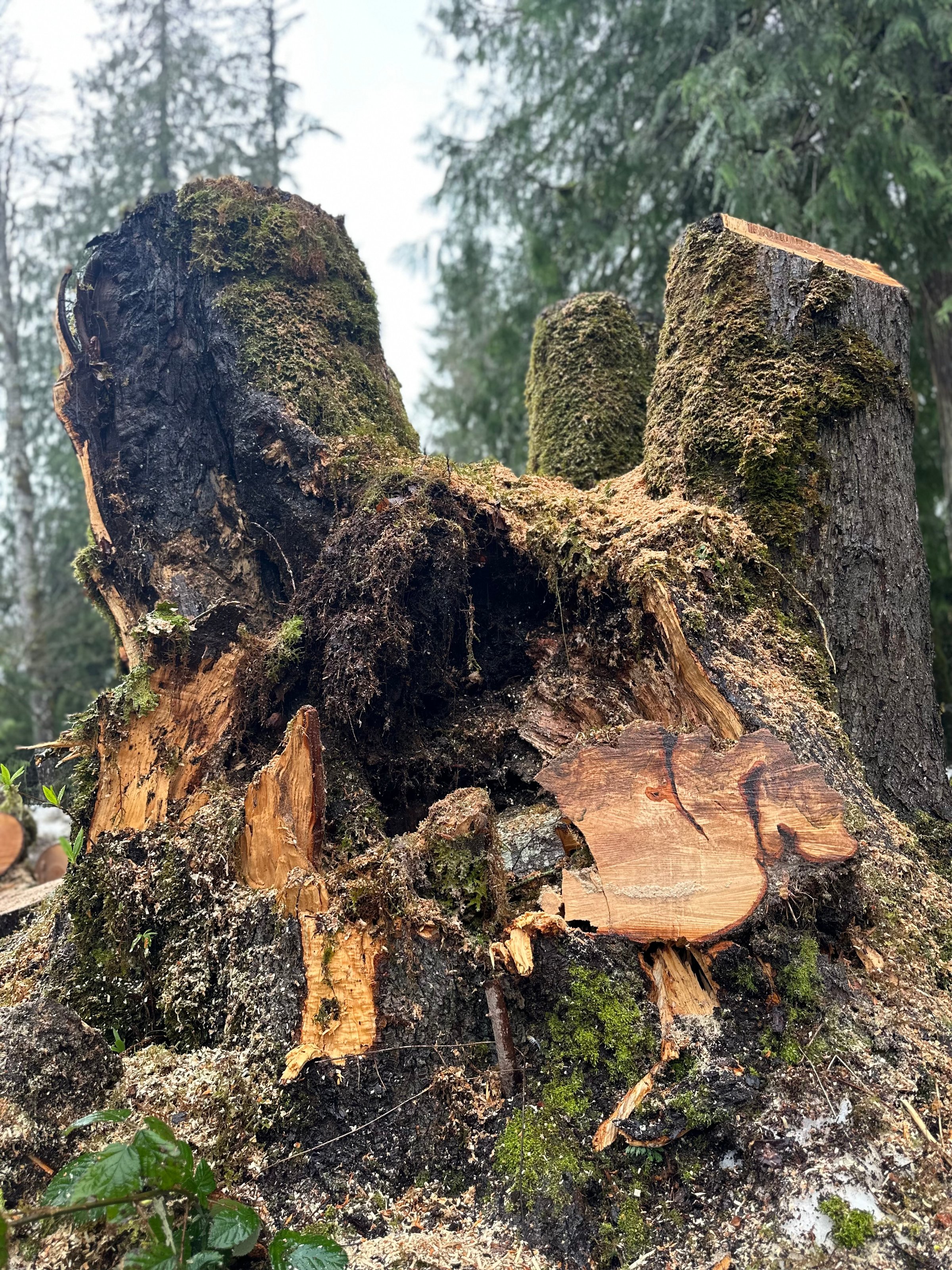
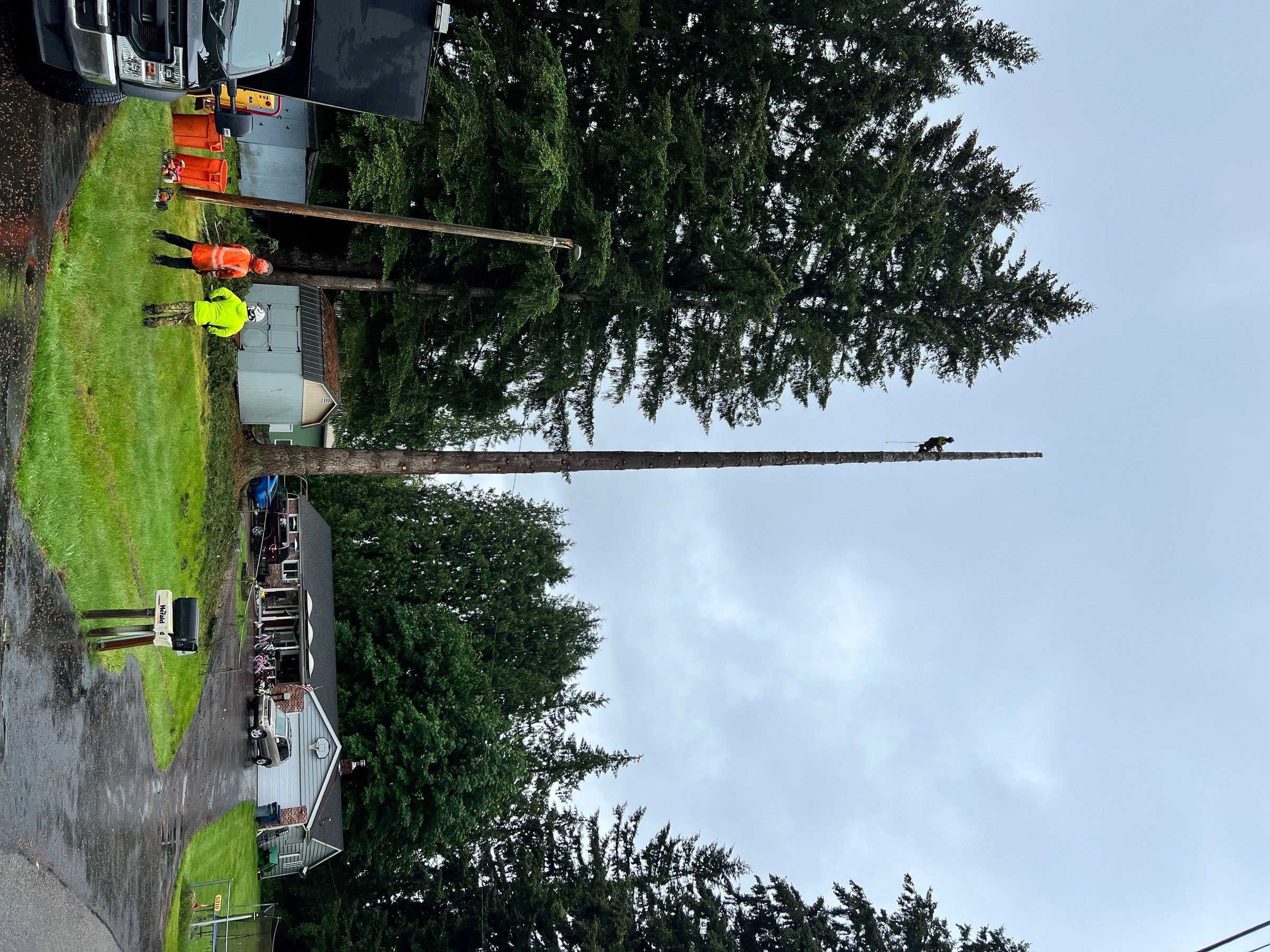
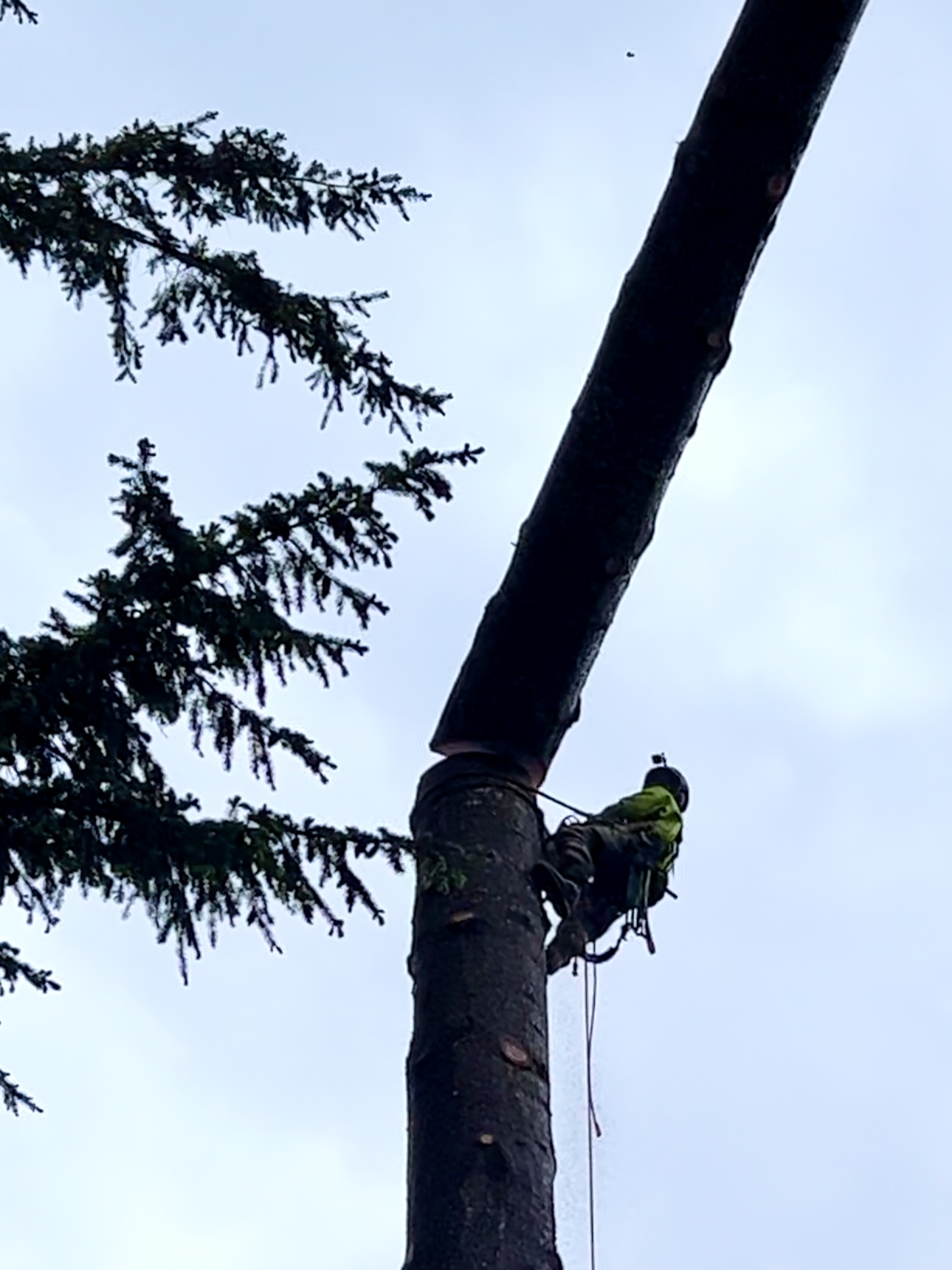
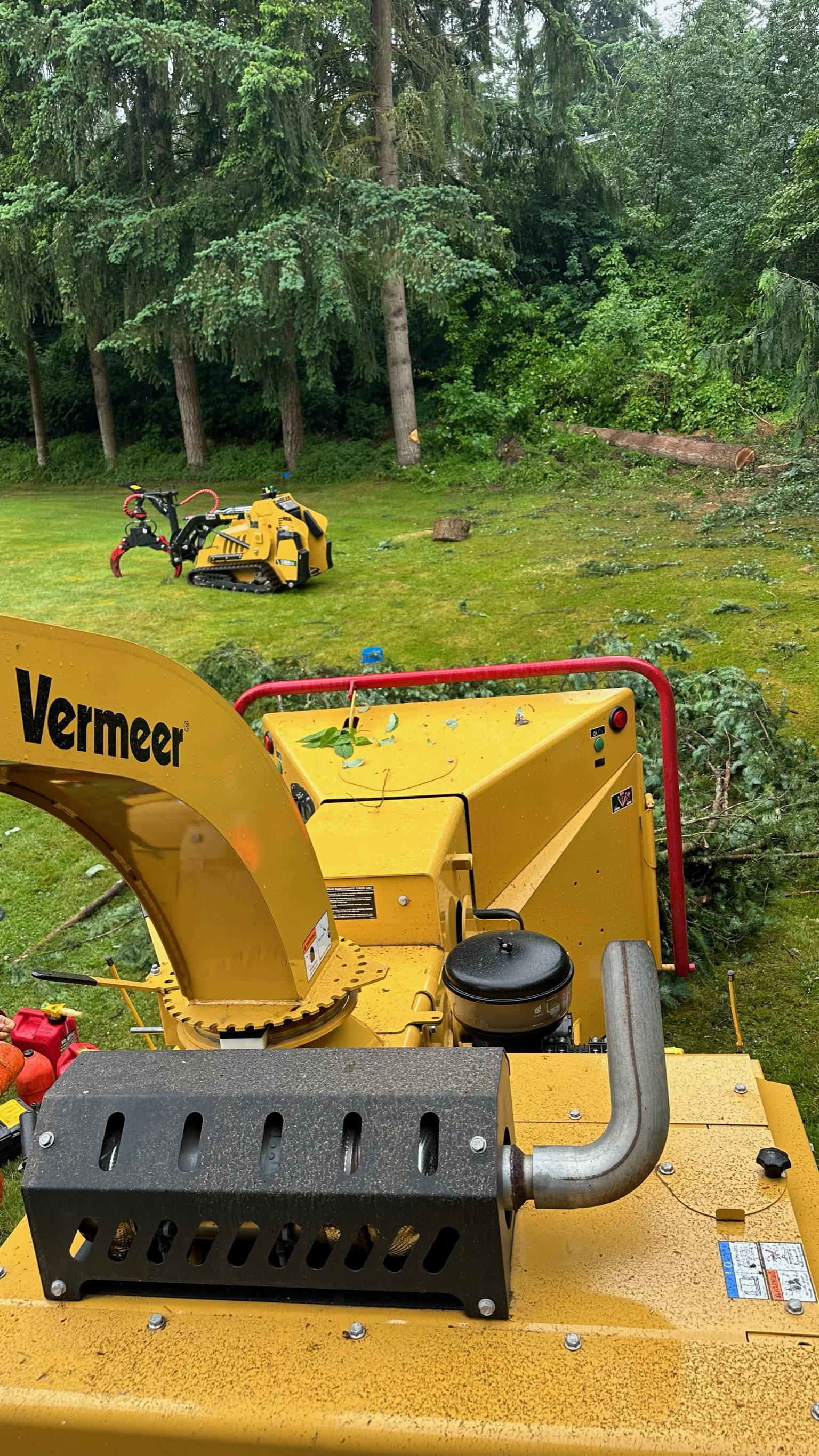
Autumn foliage changes, wet soil, wind, and snow affect trees differently. Learn what to watch for, when to keep clear, and when to arrange an assessment.
Snohomish & King County, WA — September 13, 2026 • Hazard Tree Assessment
Western red cedars are browning across the Puget Sound region, and homeowners are worried. This guide explains the difference between normal seasonal flagging and true cedar dieback, what researchers say is driving it, and how to tell when a declining cedar becomes a removal decision.
Edmonds, WA — July 26, 2026 • Hazard Tree Assessment
Black cottonwood is the fastest-growing — and most complained-about — native tree in western Washington. This guide covers how to identify it, why it drops limbs without warning, what its roots do to foundations and sewer lines, and how to decide between removal and management.
Tree work in Skykomish carries three constraints you don't see together anywhere else on Highway 2: heavier snow loads at 1,001 ft elevation, a National Register Historic District covering the entire townsite, and the active BNSF rail corridor running through the middle of town.
Tree work on a Woodinville estate or winery property is a different job than tree work on a quarter-acre suburban lot. Vineyards, tasting room operations, septic drain fields, irrigation lines, and riparian buffers all change how we sequence the work and what we have to protect.
Mill Creek was Washington's first modern planned city, and the tree-preservation framework built into its 1970s design still shapes every tree removal decision today. The architectural committee approval process, the replacement planting requirements, and the original canopy itself all need to be understood before a single cut.
Bothell is one of the few cities in Washington that straddles two counties, and that split creates a unique situation for tree care: different permit requirements, different regulations, and different enforcement depending on which side of the line your property sits on.
Lake Stevens has two distinct tree management environments: lakefront properties with erosion concerns and moisture-loving species, and upland developments on former timber land with dense second-growth conifers.
Lake Stevens, WA — April 16, 2026 • Tree Trimming & Pruning
Everett's established neighborhoods have some of the oldest and largest urban trees in Snohomish County. Managing this aging canopy requires understanding the city's tree ordinance, power line conflicts, and the unique challenges of century-old trees in dense residential settings.
The most regulated trees on a Kenmore property are usually the ones the homeowner cares about most: the ones along the lakefront, in the shoreline buffer, or near Swamp Creek. Here is how the rules read on the ground and how tree work actually gets done within them.
Kenmore, WA — April 13, 2026 • Tree Trimming & Pruning
Marysville is one of the fastest-growing cities in Snohomish County, and that growth creates specific tree challenges as new construction meets established trees and former agricultural land.
Monroe's geography ranges from the flat Skykomish River valley floor to foothill terrain at 500+ feet elevation. Each zone creates distinct tree challenges that homeowners should understand.
Snohomish's historic downtown and surrounding neighborhoods contain some of the oldest residential trees in the county. Here's what property owners need to know about managing mature trees on historic lots.
Snohomish, WA — April 8, 2026 • Tree Trimming & Pruning
A practical guide for Washington State homeowners on how to evaluate tree service companies — covering license verification, insurance requirements, quote red flags, equipment expectations, and the questions that separate reliable crews from risky ones.
Snohomish County, WA — April 7, 2026 • Tree Removal
Edmonds' five miles of Puget Sound shoreline and the steep bluffs above it set the rules for tree care on most waterfront and view-side properties. Aging Douglas fir, shallow Edmonds-series soils, and view pressure from below the canopy combine into a tree management challenge that does not exist three miles inland.
Granite Falls occupies the transition zone where Cascade foothill terrain meets lowland Stillaguamish valley. This elevation boundary creates tree hazards that neither mountain nor lowland communities face alone.
Granite Falls, WA — April 6, 2026 • Emergency Tree Service
Duvall's rapid growth is colliding with its mature tree canopy. Homeowners building additions, ADUs, or developing lots face decisions about which trees to retain and which must come down.
Duvall, WA — April 5, 2026 • Tree Trimming & Pruning
Carnation occupies the Snoqualmie Valley floodplain where the Tolt River confluence creates recurring flood events that stress trees, saturate soils, and produce a landscape that demands flood-aware tree management.
Baring straddles Highway 2 in the upper Skykomish valley where old-growth Douglas fir and cedar, limited winter access, and power line proximity create a distinct set of tree service challenges.
Index occupies a narrow valley where the North Fork Skykomish meets the main river, surrounded by granite peaks. Tree work here demands mountain-specific approaches for thin soils, extreme slopes, and single-road access.
Stanwood sits in the Stillaguamish River floodplain where windbreak trees protect agricultural fields and homesteads. Managing cottonwood, alder, and willow hedgerows requires an approach different from suburban tree care.
Mukilteo's waterfront bluffs face prevailing Puget Sound westerlies that carry salt spray inland. This coastal exposure shapes how trees grow, fail, and need to be managed differently than inland communities.
Mukilteo, WA — March 31, 2026 • Tree Trimming & Pruning
Tree work in Arlington has to account for two distinct terrains at once: the active Stillaguamish River floodplain that runs through downtown and out toward Trafton, and the dense second-growth timber covering the higher ground beyond the valley floor.
Lynnwood's position in the Puget Sound Convergence Zone means it gets hit harder by windstorms than most neighboring cities. Here is how to assess storm-damaged trees and what to do next.
Lynnwood, WA — March 30, 2026 • Emergency Tree Service
Redmond spans two tree care worlds — 80-year-old Douglas fir on Education Hill and newly planted landscapes in Redmond Ridge. Each presents different challenges for homeowners.
Redmond, WA — March 29, 2026 • Tree Trimming & Pruning
Everything Snohomish County homeowners need to know about tree services — from removal and trimming to emergency response and land clearing, covering Sultan, Everett, Snohomish, Monroe, and all 16 communities we serve.
Snohomish County, WA — March 28, 2026 • Tree Service
A look inside the biology of tree decline in western Washington — the fungi, insects, and structural failures that destroy trees from the inside out, and how our crew identifies hidden dangers before they become emergencies.
Everything King County homeowners need to know about tree services — from removal and trimming to emergency response and land clearing, covering Bothell, Woodinville, Redmond, Kenmore, Duvall, Shoreline, Carnation, and Baring.
Shoreline regulates tree removal more strictly than most cities in the region. This guide breaks down the permit requirements, exceptional tree protections, and replacement rules homeowners need to know.
Darrington sits at the edge of the Mount Baker-Snoqualmie National Forest where old-growth Douglas fir and Western red cedar can exceed 150 feet. Managing these giants on remote parcels requires specialized planning.
Tree removal in Gold Bar's Skykomish River valley demands specialized rigging techniques due to saturated alluvial soils, shallow root plates, and narrow lot access along May Creek and River Drive.
A practical guide to wood and debris cleanup in western Washington — covering storm aftermath, routine yard waste, disposal rules by area, DIY vs professional cleanup, and how to prevent future buildup.
Snohomish & King County, WA — March 18, 2026 • Wood & Debris Removal
A practical guide to land clearing in Snohomish and King County — covering permits, critical area rules, wetland buffers, realistic timelines, and what to expect when preparing a rural property for building.
Snohomish & King County, WA — March 16, 2026 • Land Clearing
A species-by-species guide to tree trimming in western Washington — covering seasonal timing, pruning types, HOA requirements, and how to get the most value from professional tree care.
Snohomish & King County, WA — March 12, 2026 • Tree Trimming & Pruning
A practical Snohomish and King County guide to tree removal cost factors, project scenarios, written estimates, permits, utilities, insurance questions, and deciding when removal is necessary.
Snohomish County, WA — March 10, 2026 • Tree Removal
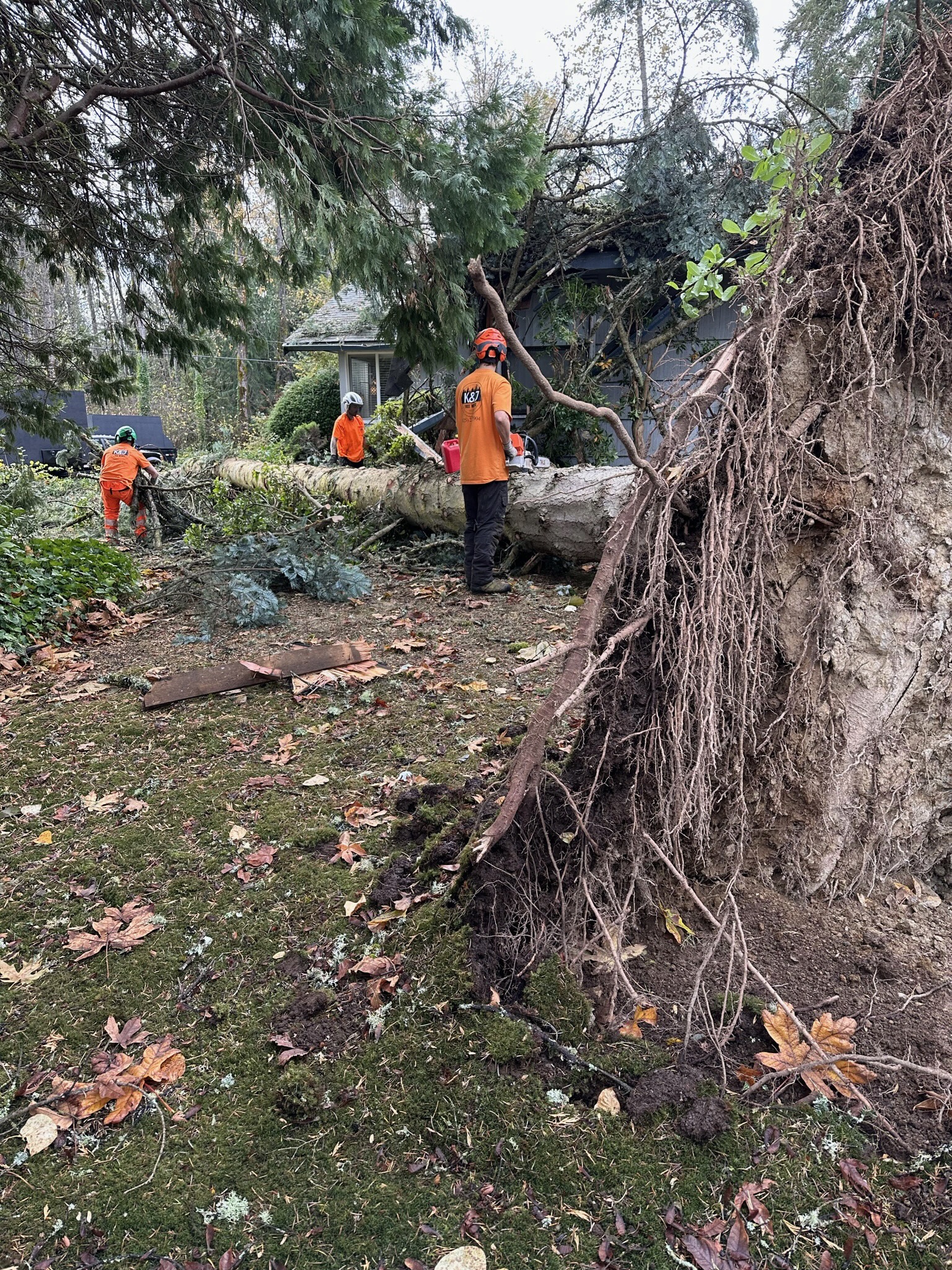
What to do when a storm drops a tree in Snohomish or King County: first safety steps, utility contacts, what insurance usually covers, Washington claim rules, and how K&J documents the tree work.
Snohomish & King County, WA — January 23, 2026 • Emergency Tree Service