Waterfront and Upland Tree Management Around Lake Stevens
Lake Stevens, WA — April 16, 2026
Lake Stevens has two distinct tree management environments: lakefront properties with erosion concerns and moisture-loving species, and upland developments on former timber land with dense second-growth conifers.
Why Does Lake Stevens Have Two Different Tree Management Environments?
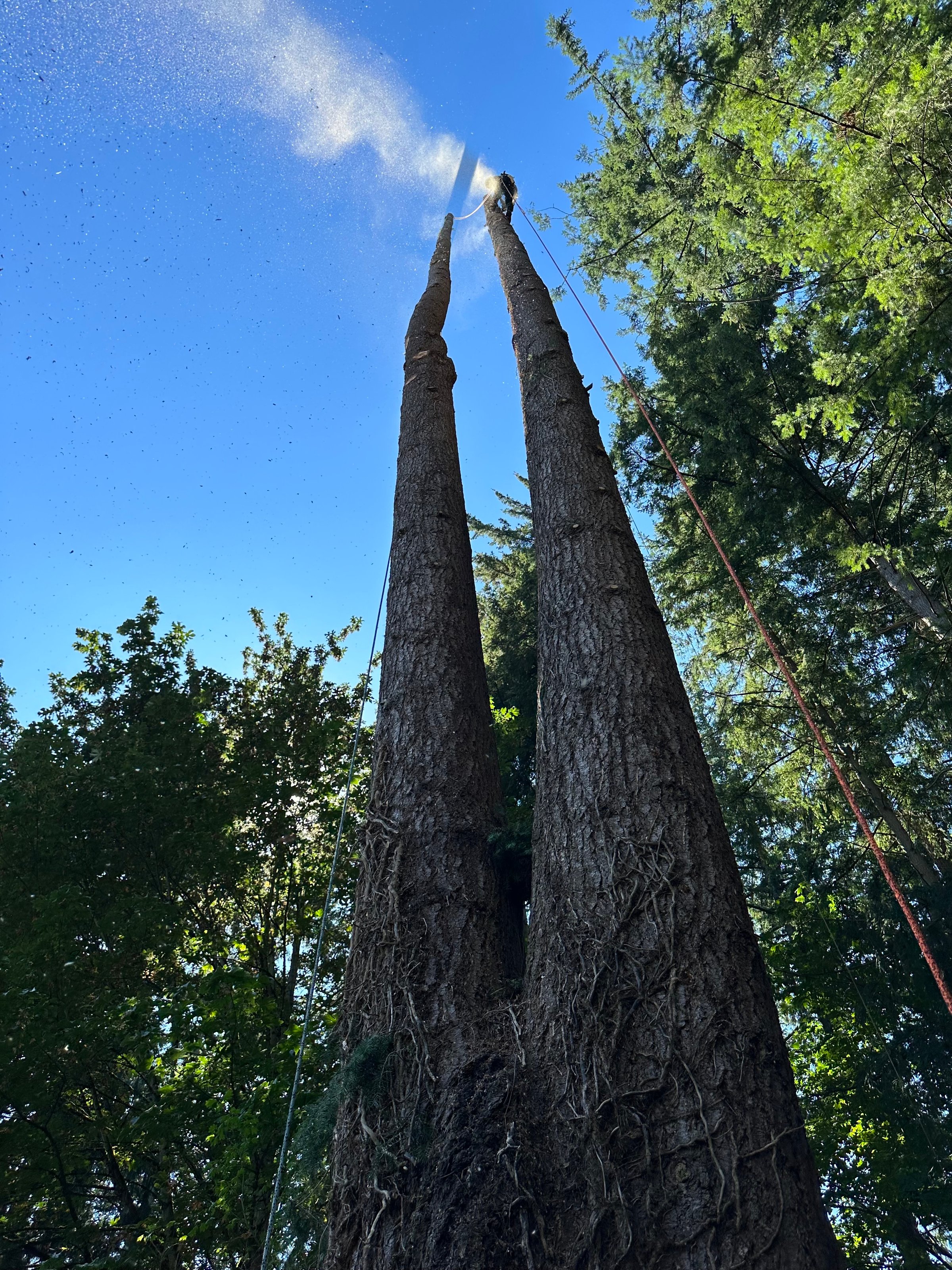
Lake Stevens the city wraps around Lake Stevens the lake, and the distance from the water defines what trees you have and what problems they cause. Lakefront properties along North Lakeshore Drive, South Lake Stevens Road, and the residential streets that ring the shore sit on glacial outwash soils near the water table. Trees here — Pacific willow, red alder, black cottonwood, Oregon ash, and western red cedar — thrive in the moisture and grow aggressively. The challenge is managing their growth while complying with the City of Lake Stevens' Shoreline management regulations, which restrict tree removal within 200 feet of the ordinary high water mark. A quarter mile from the lakeshore, the terrain rises into glacial till uplands where the landscape transitions to dense second-growth Douglas fir and western hemlock — the legacy of logging that cleared these slopes a century ago. As housing developments expand into these forested uplands, homeowners are managing 80- to 100-foot conifers on lots that were designed for houses, not forests.
- Lakefront properties within 200 feet of shore are subject to shoreline management regulations
- Moisture-loving species along the lake grow aggressively and require regular management
- Upland developments on former timber land inherit dense second-growth conifer stands
- View management requests on lakefront properties must balance aesthetics with shoreline ecology
What Tree Challenges Do Lakefront Properties Face in Lake Stevens?
Properties directly on or near Lake Stevens deal with tree issues driven by water proximity, Shoreline regulations, and species that thrive in wet conditions:
- Shoreline Setback and Buffer Regulations: The City of Lake Stevens implements the state Shoreline Management Act, which establishes buffers along the lakeshore where vegetation removal is restricted. Within these buffers, tree removal typically requires a shoreline exemption or permit. Even outside formal buffers, the city's critical areas ordinance may apply to trees near the lake. We help lakefront property owners understand which regulations affect their specific parcel before planning any tree work. The regulations do allow hazard tree removal and selective view pruning in most situations, but the process requires documentation.
- View Management vs. Vegetation Retention: Many Lake Stevens waterfront homeowners want to maintain or improve views of the lake and the Cascade foothills beyond. View pruning — selectively thinning or topping trees to create view corridors without removing them entirely — is allowed under most shoreline programs when done correctly. We use the window pruning technique, removing select branches to create sight lines through the canopy rather than removing entire trees. This approach satisfies both the homeowner's view interest and the regulatory requirement to maintain shoreline vegetation.
- Bank Stabilization from Tree Roots: Many lakefront trees, particularly willow and alder along the shore, provide critical root stabilization for the bank. Removing these trees can trigger bank erosion that undermines patios, retaining walls, and even structures. Before removing any lakefront tree, we assess whether its root system is providing bank stabilization. When bank trees must be removed for safety, we recommend replanting with deep-rooted native species that will re-establish bank stabilization as they grow.
- Overhanging Trees and Dock Access: Lakefront homeowners with private docks and boat lifts often have trees that lean over the water or drop branches onto docks and moored boats. Trimming overwater branches requires working from boats or using long-reach aerial techniques because much of the canopy hangs over the lake where ground-based equipment cannot reach. We use a combination of climbing and boat-based access to manage overwater branches on Lake Stevens waterfront properties.
What Tree Issues Affect Lake Stevens Upland Properties?
The upland neighborhoods expanding east and north of the lake face different tree challenges driven by dense conifer stands and development patterns:
- Retained Second-Growth Stands on New Lots: Developments along Hartford Road, 20th Street SE, and the areas around Frontier Village were carved from dense second-growth Douglas fir and western hemlock stands. Developers retained clusters and individual trees to meet tree retention requirements and provide the wooded lot appeal buyers want. These retained trees, adapted to the shelter of a dense stand, are now exposed to wind, altered drainage, and root zone compaction from construction. Many begin showing stress 3 to 5 years after development, following the same pattern seen in Marysville and other rapidly developing Snohomish County cities.
- Excessive Shade on Residential Lots: Dense conifer stands retained adjacent to homes in Lake Stevens upland developments create deep year-round shade that prevents lawn growth, promotes moss on roofs and siding, and keeps properties damp. Homeowners often request selective thinning or understory removal to increase light penetration. Strategic removal of the smallest, least healthy trees in a retained stand can dramatically improve light conditions while maintaining the privacy screening and wind protection that the remaining trees provide.
- Wildlife Corridor Management: Lake Stevens upland areas are home to active wildlife corridors between the lake, surrounding wetlands, and forested lands to the east. Bears, coyotes, and deer use tree corridors to move through residential areas. While wildlife management is not a tree service issue per se, homeowners sometimes request tree and brush thinning along property edges to improve visibility and reduce wildlife cover near homes. We handle this type of selective clearing while maintaining enough tree cover to preserve the natural character of the area.
How Do We Handle Tree Work Around Lake Stevens?
Our approach differs depending on whether the property is lakefront or upland:
- Regulatory Pre-Check: For lakefront properties, we verify the shoreline buffer boundaries, critical areas mapping, and any recorded environmental covenants before recommending work. For upland properties in newer developments, we check plat conditions and recorded tree retention tracts. This pre-check prevents homeowners from starting work that requires permits they did not know about.
- Lakefront Access Planning: Shoreline tree work often requires access from the water side for overhanging branches and from the land side for trunk work. We plan the access approach during the estimate visit and identify any staging areas needed for equipment. Lakefront properties with steep banks between the home and the water may require rope-assisted access for the crew.
- Selective Thinning for Upland Stands: Rather than individual tree removal, we often recommend stand thinning for upland Lake Stevens properties — removing the weakest, poorest-formed trees to give the remaining trees more space, light, and wind stability. A well-thinned stand of 8 to 10 healthy Douglas fir looks better, is safer, and is more wind-resistant than a dense cluster of 20 competing trees.
- View Pruning Documentation: For lakefront view pruning projects that may fall under shoreline regulations, we document the existing conditions, the specific branches to be removed, and the expected visual result before beginning work. This documentation supports any shoreline exemption application and provides a record of the pruning scope for future reference.
Lake Stevens Tree Service Questions
- Can I remove trees to improve my view of the lake in Lake Stevens?
- You can manage trees for views, but the approach depends on your proximity to the lakeshore. Properties within the shoreline management zone (typically 200 feet of the ordinary high water mark) generally cannot remove healthy trees solely for views, but selective pruning to create view windows is usually allowed. Properties outside the shoreline zone have fewer restrictions. We assess your specific regulatory situation and recommend the most effective approach within the applicable rules.
- How much does lakefront tree work cost compared to upland work in Lake Stevens?
- Lakefront tree work in Lake Stevens typically costs 20 to 40 percent more than comparable upland work. The premium comes from access challenges (bank slopes, water-side access), regulatory compliance time (shoreline permitting), and the extra care required when working near water and bank-stabilizing root systems. A lakefront tree removal that would cost $2,000 on an open upland lot might run $2,500 to $3,000 on a lakefront property.
- Will removing the trees behind my Lake Stevens home cause the bank to erode?
- It depends on the species, root depth, bank slope, and soil type. Willow and alder roots are among the most effective bank stabilizers in our region — removing them from steep lakefront banks can trigger erosion within one rainy season. Conifers like Douglas fir have deeper roots that stabilize slopes differently. We assess bank stability before recommending any removals near the lakefront and can recommend stabilization measures if removal is necessary for safety.
- The developer left a cluster of Douglas fir in my Lake Stevens yard and now they are all leaning — what should I do?
- Retained conifer clusters in Lake Stevens developments commonly develop lean after the surrounding stand is removed, because the trees are now exposed to wind loads they were never designed to handle. If the lean is progressive — getting worse over time — one or more trees may need removal before they fail. If the lean appears stable, crown thinning to reduce wind load can improve their long-term viability. We provide free assessments to determine which trees in a retained cluster are at risk and which can be safely maintained.
- Do I need a permit to thin the trees on my upland Lake Stevens lot?
- For developed residential lots outside critical areas and recorded tree retention tracts, the City of Lake Stevens generally does not require permits for standard residential tree removal. However, if your lot is in a newer subdivision, check the recorded plat for tree retention tract boundaries and any CCR restrictions. Critical areas — wetland buffers, steep slopes, and stream corridors — have additional protections that may require permits. We check these conditions as part of our pre-work assessment.
Need Tree Work on Your Lake Stevens Property?
Whether you are on the lakeshore or in the upland developments, K&J Tree Works has the experience to handle Lake Stevens' diverse tree management needs. Free on-site assessments for all Lake Stevens properties. Call (425) 223-7904 or request an estimate online. Monday through Saturday, 8 AM to 5 PM.