Tree Removal Permits in Bothell, WA: Snohomish vs King County
Bothell, WA — April 18, 2026
Bothell is one of the few cities in Washington that straddles two counties, and that split creates a unique situation for tree care: different permit requirements, different regulations, and different enforcement depending on which side of the line your property sits on.
How Does the County Line Affect Tree Care in Bothell?
The Snohomish-King county line runs roughly along the Bothell-Everett Highway (SR 527) and 228th Street SE, splitting the city into a larger King County portion to the south and west and a smaller Snohomish County portion to the north and east. Most of Bothell's established neighborhoods — Canyon Park, North Creek, Queensborough, and the neighborhoods around the University of Washington Bothell campus — are in King County. The newer developments north of the Bothell-Everett Highway and east toward Mill Creek are in Snohomish County. The practical impact for homeowners is that two properties on the same street can have different permitting requirements for tree removal. A 24-inch Douglas fir on the King County side of 228th Street may require a different permit process than the same tree on the Snohomish County side. We frequently work in both portions of Bothell and know the differences, but homeowners are often surprised to learn that the county line affects something as straightforward as removing a tree in their yard.
- Bothell spans both Snohomish and King County with the line running roughly along SR 527
- Tree permit requirements can differ between the two county portions of the city
- The Sammamish River corridor adds additional critical areas regulations in central Bothell
- Compact suburban lots with 60-100 foot mature conifers create neighbor-to-neighbor tree conflicts
How Do Tree Regulations Differ Between Bothell's Two Counties?
Understanding which county your property is in determines which rules apply to your tree removal project:
- Bothell Municipal Code (Both Sides): The City of Bothell has its own tree preservation code (BMC 12.18) that applies to all properties within city limits regardless of which county they fall in. This code regulates removal of significant trees (generally 6 inches DBH or larger) on developed lots and requires tree retention plans for new development. The city code provides the baseline rules, but county-level regulations can add additional requirements.
- King County Side — Additional Protections: Properties on the King County side of Bothell may also fall under King County's tree retention requirements, which tend to be more restrictive than Snohomish County's. King County has specific rural stewardship provisions, stronger protections for trees near waterways, and more detailed environmental review requirements for clearing activities. If your Bothell property is in unincorporated King County (some parcels at the edge of city limits), King County's regulations apply directly instead of the city code.
- Snohomish County Side — Different Critical Areas: Properties on the Snohomish County side of Bothell fall under Snohomish County's Critical Areas Ordinance for issues involving wetland buffers, steep slopes, and stream corridors. Snohomish County's critical areas definitions, buffer widths, and mitigation requirements differ in specific ways from King County's — sometimes more permissive, sometimes more restrictive depending on the specific critical area type.
- How to Determine Your County: The simplest way to check which county your Bothell property is in: look at your property tax statement. It will show either Snohomish County or King County as the taxing authority. You can also check using the Snohomish County or King County online parcel viewers. If your property is near the county line, verify before planning tree work — we have seen cases where neighbors on the same cul-de-sac are in different counties.
How Does the Sammamish River Corridor Affect Tree Management in Bothell?
The Sammamish River runs through the heart of Bothell, and its corridor creates additional tree management considerations:
- Riparian Buffer Restrictions: Properties along the Sammamish River, North Creek, and their tributaries have riparian buffer requirements that restrict vegetation removal near waterways. Buffer widths vary by stream classification and can extend 50 to 150 feet from the ordinary high water mark. Many Bothell properties in neighborhoods along Bothell Way, the Burke-Gilman Trail corridor, and near the UW Bothell wetlands campus have buffer zones that cover a significant portion of their lots. Trees within these buffers generally cannot be removed unless they pose a documented safety hazard.
- Flood Zone Considerations: The Sammamish River floodplain covers a wide swath through central Bothell. Properties in the mapped flood zone face additional scrutiny for any ground disturbance, including stump removal. We typically recommend cutting flood zone trees at grade and leaving stumps in place rather than grinding or pulling them, because disturbing the root system in a flood zone can create drainage issues and trigger regulatory review.
- Mature Trees Along the Trail Corridors: The Burke-Gilman Trail, North Creek Trail, and Sammamish River Trail run through Bothell's tree-canopy areas. Properties adjacent to these trails often have mature trees whose branches overhang the trail. While the city maintains trail-side vegetation, private property trees that overhang the trail are the homeowner's responsibility. We work on trail-adjacent trees regularly in Bothell, coordinating with the city parks department when work affects trail access.
How Do We Handle Tree Work in Bothell's Split Jurisdiction?
Our approach to Bothell tree projects accounts for the dual-county regulatory landscape:
- County and Regulatory Identification: Before quoting any Bothell project, we identify which county the property is in, check the city's critical areas mapping for stream buffers and wetlands, and verify whether the property is in a flood zone. This 10-minute pre-check prevents permit surprises and ensures our quote reflects the actual scope of work including any regulatory compliance steps.
- Neighbor Communication for Shared Trees: Bothell's compact lots mean many trees affect multiple properties. When a tree's canopy overhangs a neighbor's home or a trunk sits close to a property line, we recommend discussing the project with adjacent property owners before beginning work. In our experience, Bothell neighbors generally appreciate the communication and sometimes share costs for lot-edge tree work.
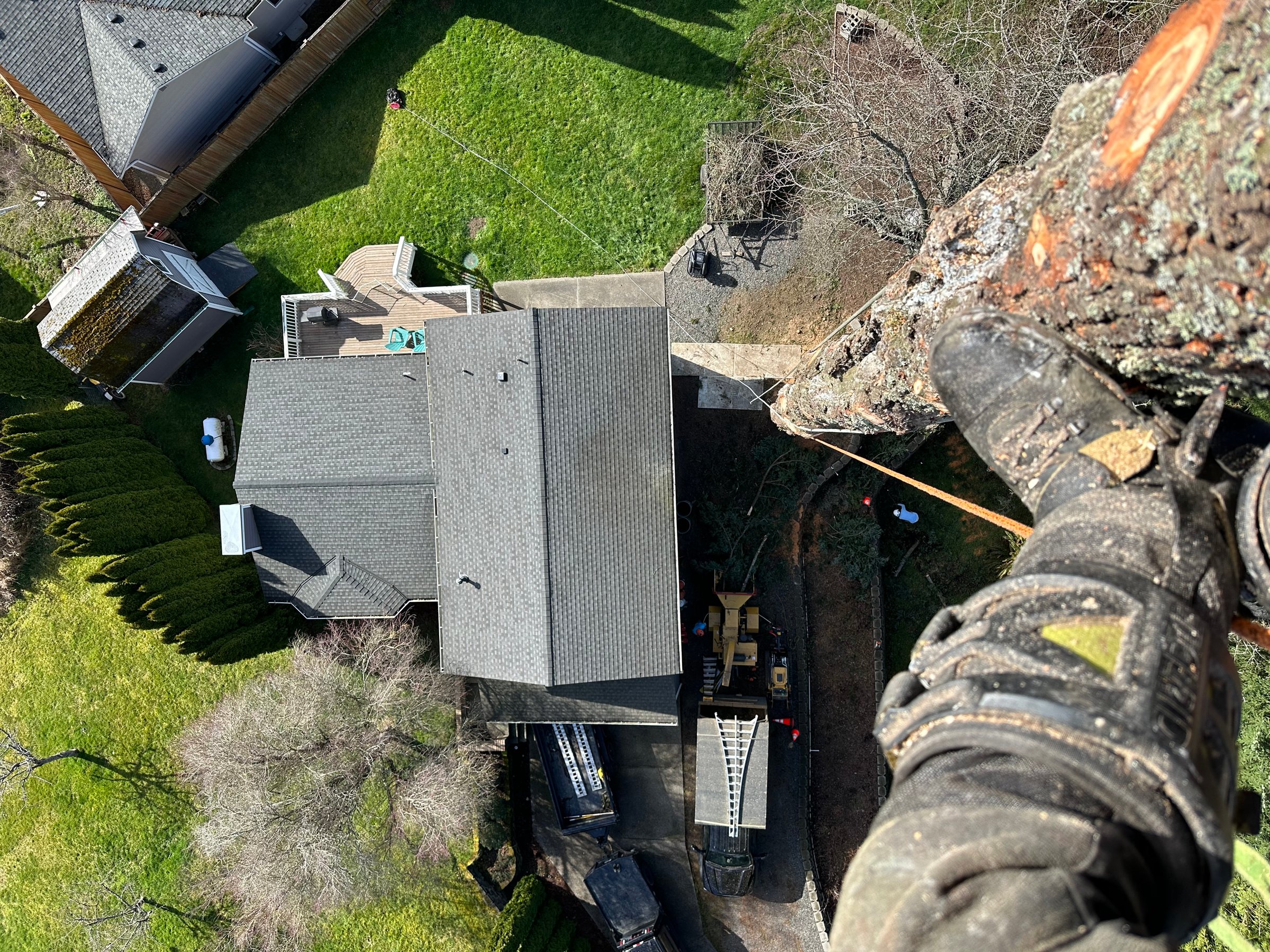
- Efficient Work in Compact Lots: Most residential lots in Bothell are 5,000 to 8,000 square feet — compact by Snohomish County standards. We stage equipment on the street, use hand-carrying for debris in tight backyard access situations, and rig every piece when working between structures. Our crew is experienced with the tight-quarters work that Bothell lots require.
- Documentation for Dual-Jurisdiction Compliance: When a project involves trees in critical areas, we provide documentation that satisfies both the Bothell city requirements and the applicable county regulations. For hazard tree removals, our written assessments include the hazard description, photos, and our professional recommendation — documentation that works for both Snohomish and King County review processes.
Bothell Tree Service Questions
- How do I find out if my Bothell property is in Snohomish County or King County?
- Check your property tax statement — it identifies the county. You can also search your address on the Snohomish County Assessor or King County Assessor websites. If your property is near the county line (roughly along SR 527 and 228th Street SE), it is worth verifying because the difference can affect permit requirements. The Bothell Permit Center can also confirm your county jurisdiction.
- Do I need a permit to remove a tree in Bothell?
- It depends on the tree size, your lot's zoning, and whether the tree is in a critical area. Bothell's tree preservation code regulates significant trees (generally 6 inches DBH or larger). Removing one or two hazardous trees on a developed residential lot is typically straightforward, but removing multiple significant trees or trees within stream buffers or wetland areas may require a permit. We assess the permit situation during our free on-site estimate and explain what steps are needed.
- My Bothell property backs up to the Sammamish River — can I remove the trees along the bank?
- Trees within the Sammamish River riparian buffer are protected, and removal generally requires a documented safety hazard and regulatory approval. The buffer width depends on your property's stream classification — typically 50 to 150 feet from the ordinary high water mark. Selective pruning for safety (removing dead branches, reducing lean toward structures) is usually possible within the buffer with proper documentation. Full tree removal requires a stronger justification such as imminent hazard to an occupied structure.
- How much does tree removal cost in Bothell?
- Tree removal in Bothell typically costs $1,500 to $4,000 for standard residential removals (60 to 100 foot trees on compact lots). The tight lot spacing means most removals require sectional dismantling with rigging rather than simple felling, which adds labor time. Trees near the Sammamish River corridor or in critical areas may have additional costs for regulatory documentation and compliance. We provide free on-site estimates for all Bothell properties.
- Can the county line actually affect what I pay to remove a tree in Bothell?
- Indirectly, yes. If your property falls under King County's more restrictive regulations (for example, near a waterway where King County buffer requirements are wider than Snohomish County's), you may need more documentation, a different permit process, or replacement planting that adds to the overall project cost. The tree removal itself costs the same regardless of county, but the regulatory compliance steps can differ. We identify these differences during the estimate so you know the full picture before committing.
Need Tree Service in Bothell?
K&J Tree Works navigates Bothell's dual-county regulations so you do not have to. We provide free on-site assessments for properties on both the Snohomish County and King County sides of Bothell. Call (425) 223-7904 or request an estimate online. Monday through Saturday, 8 AM to 5 PM.