Tree Service in Skykomish, WA: Snow-Load and Historic Guide
Skykomish, WA — April 28, 2026
Tree work in Skykomish carries three constraints you don't see together anywhere else on Highway 2: heavier snow loads at 1,001 ft elevation, a National Register Historic District covering the entire townsite, and the active BNSF rail corridor running through the middle of town.
Why Tree Work in Skykomish Doesn't Look Like Tree Work in Sultan
Skykomish was founded in the 1890s as a Great Northern Railway division point, and the entire townsite is listed on the National Register of Historic Places — that's the foundation that everything else gets layered on top of. The town sits at roughly 1,001 feet on the approach to Stevens Pass, which puts it noticeably higher than the Highway 2 communities to its west: Sultan is around 100 feet, Gold Bar around 250 feet, Index around 535 feet, Baring around 800 feet. That 200-to-900-foot elevation gap matters because it changes how much cumulative snow accumulates each winter and how often the ground temperature swings through freeze-thaw cycles that bring down weakened conifers. Layered on top of the snow physics is the historic-district overlay across the entire townsite, the active BNSF main line running directly through downtown, and an ownership pattern where a meaningful share of homes are weekenders or Stevens Pass-bound vacation cabins. Tree work in this combination of conditions is not the same job as tree work on a Sultan rural lot, and pretending otherwise is how heritage buildings get damaged and rail-corridor incidents happen. K&J Tree Works runs Highway 2 between Sultan and Stevens Pass on a regular cycle, and Skykomish is part of that route — about 22 miles east of our shop. We bring the rigging, the climbers, and the historic-district awareness this townsite deserves.
- Skykomish sits at ~1,001 ft elevation, higher than any other Highway 2 community we serve west of Stevens Pass
- The entire townsite is a National Register Historic District, which shapes how rigging and brush staging happen near heritage structures
- The active BNSF main line runs through downtown, removing certain felling and rigging directions from consideration
- Permit authority is split between the Town of Skykomish (incorporated parcels) and surrounding unincorporated King County
What Heavier Snow Loads Do to Skykomish Conifers
At 1,001 feet, Skykomish accumulates more cumulative snow each winter than Sultan or Gold Bar and gets significantly more rain-on-snow events than the lower Highway 2 communities. The biological consequences for the surrounding forest are predictable, and they drive a meaningful share of our Skykomish workload:
- Western Hemlock Lean and Topple: Western hemlock is the dominant conifer at Skykomish's elevation, and it is the most snow-vulnerable major species in the area. Hemlocks are shallow-rooted on the thin mountain soils above the townsite, and a heavy wet-snow event on top of saturated ground is the classic recipe for a mature hemlock to lean toward downtown — sometimes overnight. Pre-failure leaning hemlocks are a steady removal request from late November through March.
- Douglas Fir Broken Tops: The Douglas firs on the ridges above Skykomish reach significant height, and the upper 20 to 40 feet of a mature Doug fir is what fails when ice loads onto needles and small branches. We see broken-top firs across the townsite every winter, and broken tops are not a wait-and-see condition: a snapped top that's hung up in lower branches will eventually shift and come down, and the question is just whether it lands on a roof, a vehicle, or open ground.
- Pacific Silver Fir on Higher Ridges: Pacific silver fir appears on the higher ridges around Skykomish where elevation favors true firs over Douglas fir. The species has brittle limb structure that fails under ice loading and during heavy spring snowmelt — pieces from a silver fir failure tend to come down as a cluster rather than individual branches, which makes them more dangerous to anything underneath.
- Western Red Cedar Heart Rot: The cedars in the moister draws around the townsite are a different problem. Heart rot in mature cedars is invisible from the outside until the trunk fails, and the most reliable warning sign — fungal conks at the base — is often hidden by snow during the months when the tree is most likely to come down. Pre-winter cedar inspection on heritage-adjacent lots is a job we do regularly here.
- Bigleaf Maple Branch Failures: Bigleaf maples in the wet Highway 2 microclimate carry heavy moss and licorice-fern epiphyte loads that add real weight to the branch system. Ice events on top of that loading bring branches down — sometimes 8-inch-diameter limbs from a height that puts heritage roofs and parked vehicles directly in the path.
What the National Register Historic District Means for Rigging
The entire Skykomish townsite is a listed National Register Historic District, which doesn't mean tree work is forbidden — it means the standard of care near heritage structures is higher than it is on a contemporary suburban lot. Practical implications we work with on every Skykomish job:
- Drop Zones Are Smaller Than They Look: The original townsite plat from the 1890s used small lots with short setbacks. Mature conifers that grew in over the following century are now standing in drop zones that look open on a satellite view but are actually framed by heritage siding, original windows, and outbuildings that pre-date modern roofing. Sectional dismantling from the top down is the default approach for any tree near a contributing structure — we do not free-fell into tight historic-downtown lots.
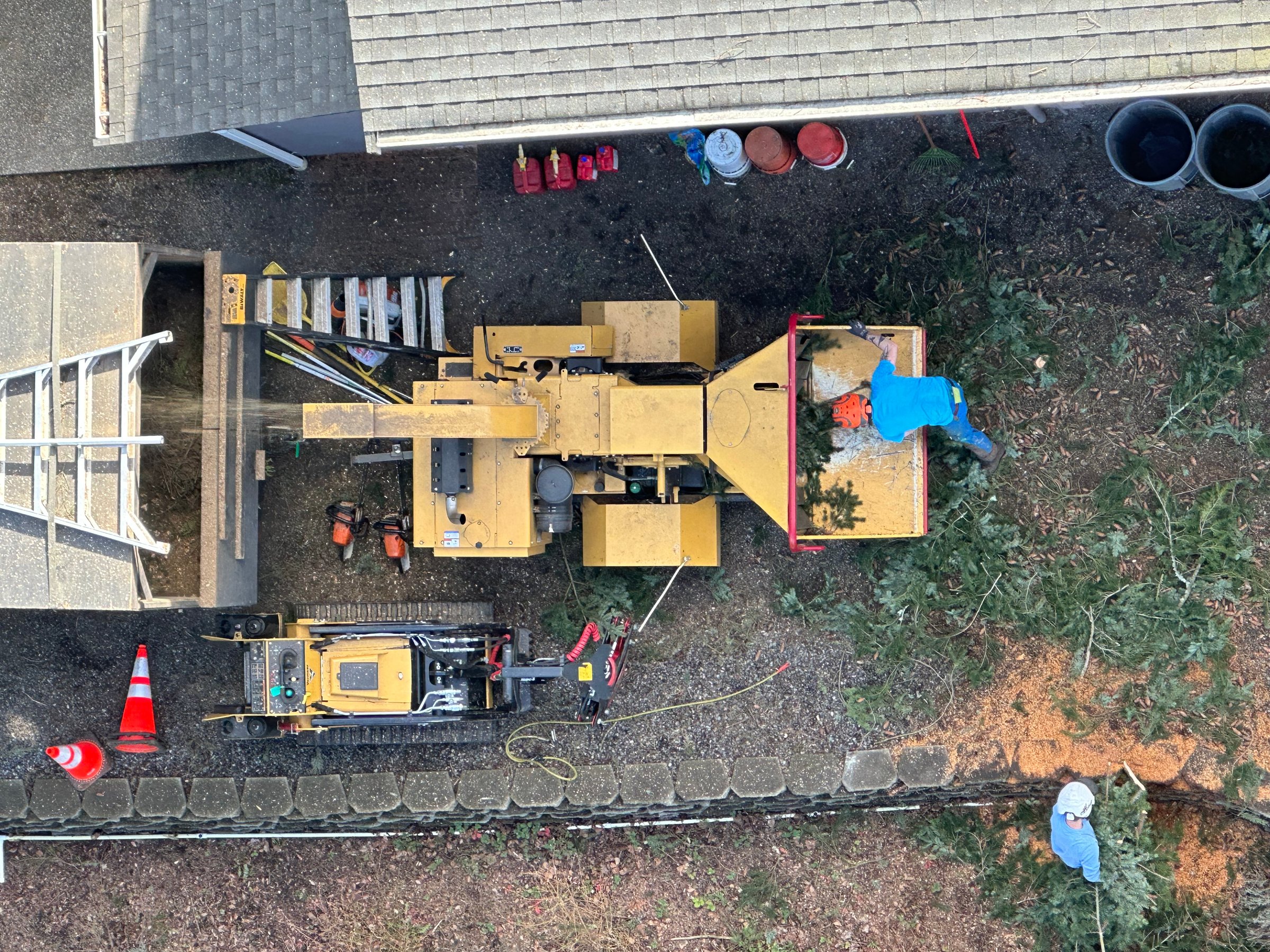
- Brush Staging Has To Respect Setbacks: Where we pile brush, where the chipper sits, and where wood rounds are stacked all matter on a historic parcel. Heritage structures shouldn't have a debris pile leaning against them for a week, and the visual character of the district shouldn't be a job-site impression. We stage to the smallest possible footprint and chip or haul out the same day where access allows.
- Heritage Roof Protection: Original cedar shake roofs and older metal roofs on heritage structures are easier to damage than modern composite shingles. Anything we lower over a heritage roof gets controlled with two-rope rigging rather than single-line drops, and ground crews catch pieces before they touch down on the roof line — not after.
- Documentation for Insurance and Heritage Records: On heritage-structure-adjacent jobs, we document conditions before and after with photos. That serves two purposes: it confirms our work didn't damage the structure, and it gives the owner a record they can share with insurers or the National Register stewardship if questions ever come up.
Working Around the Active BNSF Main Line
The BNSF Stevens Pass main line runs directly through downtown Skykomish — the tracks separate the historic depot side of town from the residential blocks on the other side. Tree work near the right-of-way involves coordination that has no equivalent in suburban work:
- Right-of-Way Boundary Awareness: The BNSF right-of-way extends some distance from the rail itself, and trees inside the right-of-way are not in our scope to work — that's railroad-managed territory. Trees outside the right-of-way that could fall into it during removal are our responsibility to keep contained. Knowing exactly where the boundary sits before any cut starts is the first step on any rail-adjacent job.
- Felling Directions That Are Off the Table: Free-felling a tree toward the rail corridor is not an option, even if the tree would clear the right-of-way on the way down. Sectional removal from the top down, with controlled lowering, is the standard for any tree where the natural fall line crosses the corridor. That adds rigging time and cost, but it's the only acceptable approach.
- Coordination Before the Cut: When a job involves work above or immediately adjacent to the right-of-way, BNSF coordination happens before equipment shows up. We do not freelance on the rail corridor — track time, flagging, and notification all go through the appropriate channels in advance. Owners sometimes don't realize their tree's lean direction puts the project into rail-coordination territory; we identify that during the on-site estimate.
- Storm-Down Trees in the Corridor: When a Highway 2 windstorm puts a tree across the BNSF main line, that's not our call to clear — railroad maintenance handles trees inside their own right-of-way. We do clear adjacent properties and any trees on private parcels that are pulling on the corridor, but the in-corridor work happens through railroad channels.
How a Typical Skykomish Job Runs
Tree work in Skykomish has more pre-work coordination than tree work in Sultan or Gold Bar. Our standard sequence on a Skykomish residential or heritage-adjacent removal:
- Free On-Site Estimate: We drive Highway 2 east from Sultan, walk the trees with the owner, identify the right permit authority (Town of Skykomish or unincorporated King County), and confirm whether any rigging direction would put the job into BNSF coordination territory. Written quote, no obligation.
- Permit and Rail-Corridor Pre-Work: If the parcel sits inside the National Register Historic District near contributing structures, we walk through what that means for staging and rigging. If any rigging direction touches the BNSF right-of-way, we coordinate with the railroad ahead of the work date — not on the morning of the job.
- Highway 2 Scheduling Window: We schedule with Highway 2 conditions in mind. Stevens Pass weekend traffic and winter storm closures shape when the crew can reliably reach Skykomish, and we set realistic windows rather than promising a slot the highway might not deliver.
- Rigging-First Removal: Trees come down in sections from the top with controlled lowering, especially near heritage structures and the rail corridor. Drop zones stay tight. Heritage roofs get rope-controlled lowering rather than free drops.
- Same-Day Cleanup and Walkthrough: Brush gets chipped on-site where access allows or staged for haul-out. Wood rounds are stacked where the owner wants them or hauled out. We do a walkthrough before leaving — heritage-district jobs don't end with a debris pile next to the building.
Skykomish Tree Care Questions We Hear Most
- Do I need a permit to remove a tree in Skykomish, WA?
- It depends on whether your parcel is inside the incorporated Town of Skykomish boundary or in surrounding unincorporated King County. Town parcels fall under local Skykomish code; unincorporated parcels fall under King County critical-areas and tree-removal regulations. Properties inside the National Register Historic District boundary may have additional review considerations for work near contributing structures, and lots near the Skykomish River, the South Fork, or steep slopes above the townsite can trigger critical-areas rules. We don't pull permits for owners, but we identify which agency to call during the on-site estimate so there are no surprises mid-job.
- How is tree work in Skykomish different from Baring or Index?
- Skykomish sits notably higher than Baring (~600 to 800 ft) and slightly higher than Index (~535 ft), so the cumulative snow load and rain-on-snow stress on conifers here is more severe — we plan for more broken-top removals than in the lower Highway 2 towns. The entire townsite is also a National Register Historic District, so jobs near downtown require tighter rigging discipline and brush-staging plans than open rural lots in Baring or Index allow. The active BNSF main line runs through the middle of town, which removes certain felling and rigging directions from the table on parcels near the right-of-way. And Skykomish ownership skews more toward weekend and Stevens Pass vacation cabins than Baring or Index, so we do more preventive winter prep for absent owners.
- Can you do tree work near the BNSF main line through downtown?
- Yes — but with rail-corridor coordination handled in advance, not on the day of the job. We don't free-fell toward the right-of-way regardless of how clean the fall line looks. Anything where the natural fall direction crosses the corridor comes down in sections from the top with controlled lowering. Trees inside the BNSF right-of-way itself are railroad-managed and not in our scope, but anything on adjacent private property that could pull on the corridor during removal is our responsibility to keep contained.
- My cabin in Skykomish is a vacation property — do you do off-season inspections?
- Yes, and a meaningful share of our Skykomish work is preventive inspection for absent owners. Coming up on Highway 2 in October or early November to identify pre-failure trees before the heavy snow season lets us schedule removal on the calendar instead of as a midwinter emergency. We document what we find with photos so absentee owners can make decisions remotely, and we can return for the actual work when scheduling allows.
- What species cause the most problems in Skykomish?
- Western hemlock is the most snow-vulnerable major species at this elevation — shallow-rooted on thin mountain soils, prone to leaning or toppling under wet-snow loading. Douglas fir broken tops from ice loading are the next most common winter call. Western red cedar heart rot is the silent problem because the warning signs are hidden by snow during the months when the tree is most likely to fail. Pacific silver fir on the higher ridges has brittle limb structure that fails as a cluster rather than individual branches. Bigleaf maples carry heavy moss and epiphyte loads that fail under ice.
- How fast can you respond to a Skykomish storm emergency?
- Highway 2 windstorms and heavy snow events drop trees across Skykomish driveways, roofs, and outbuildings every winter, and we respond as fast as Stevens Pass conditions allow. When the highway is open, we can typically reach Skykomish within a couple of hours of a call. When Stevens Pass closures or downed trees on the highway delay access, we set a realistic window rather than promising a slot the highway can't deliver. Call (425) 223-7904 — emergency response Monday through Saturday, 8 AM to 5 PM, weather and Highway 2 access permitting.
Tree Concerns at Your Skykomish Home or Cabin?
K&J Tree Works runs Highway 2 weekly between Sultan and Stevens Pass — Skykomish is part of our regular corridor, not a long-haul out-of-area trip. We provide free on-site estimates for full-time residents and weekend cabin owners, with the rigging discipline that historic-district and rail-adjacent work requires. Call (425) 223-7904 or request an estimate online. Monday through Saturday, 8 AM to 5 PM.