Tree Trimming Guide for Western Washington
Snohomish County, WA — March 12, 2026
A species-by-species guide to tree trimming in western Washington — covering seasonal timing, pruning types, HOA requirements, and how to get the most value from professional tree care.
Why Pacific Northwest Trees Need Different Care
Western Washington's mild, wet climate produces some of the fastest-growing trees in North America. A Douglas fir can add 2 to 3 feet of height per year. Big leaf maples develop sprawling canopies that can span 80 feet. Red alders grow from seedling to 60 feet in 20 years. This rapid growth is beautiful — but it also means Pacific Northwest trees outgrow their space faster than trees in drier climates. Branches extend over roofs, into power lines, and across property boundaries within a few years of the last trimming. The region's wet winters add weight to already-extended limbs, and windstorms from October through March test every weak attachment point. Regular professional trimming keeps this growth manageable and prevents the kind of storm damage that leads to emergency calls and expensive removals.
Species-by-Species Trimming Guide
Each tree species in our region has different growth habits, pruning tolerances, and ideal timing windows. Here is what we recommend for the trees most commonly found on Snohomish and King County properties:
- Douglas Fir (Pseudotsuga menziesii): The dominant conifer across the region. Can be pruned year-round, but avoid heavy pruning during the spring growth flush in April and May. Focus on deadwood removal, clearance from structures, and thinning dense interior branches to reduce wind resistance. Douglas firs do not respond well to topping — topped trees develop weak, bushy regrowth that is more hazardous than the original canopy.
- Western Red Cedar (Thuja plicata): Tolerates pruning well and can be trimmed year-round. Responds best to selective branch removal rather than shearing. Common on rural properties in Sultan, Monroe, and Carnation where old-growth remnants or large second-growth trees shade homes and driveways.
- Big Leaf Maple (Acer macrophyllum): Prune during dormancy from November through February to minimize sap bleeding and reduce disease risk. These trees develop heavy, spreading branches that often need crown reduction to prevent breakage. Moss and epiphyte loading on branches in the Puget Sound lowlands adds significant weight that makes regular pruning important.
- Red Alder (Alnus rubra): Fast-growing and relatively short-lived — 40 to 60 years. Alder wood is brittle and prone to breakage in storms. Prune during dormancy. Many properties in Everett, Marysville, and Stanwood have alders that were left during development and now overhang structures.
- Ornamental and Fruit Trees: Japanese maples, flowering cherries, plums, and apple trees have specific pruning needs. Most are best pruned in late winter before bud break. Avoid pruning stone fruits during wet weather to reduce bacterial canker risk. Common in suburban neighborhoods in Mill Creek, Woodinville, Bothell, and Shoreline.
Understanding the Different Types of Pruning
Professional arborists use specific pruning techniques depending on the goal. Knowing the terminology helps you communicate what your trees need and understand what you are paying for:
- Crown Cleaning: Removing dead, dying, diseased, and broken branches from throughout the canopy. This is the most common and most important type of pruning for Pacific Northwest trees. Dead branches fall unpredictably, and removing them eliminates falling debris hazards. Every tree benefits from crown cleaning every 3 to 5 years.
- Crown Thinning: Selectively removing live branches to reduce canopy density. This allows more light through the canopy and reduces wind resistance — both important during Puget Sound windstorms. Thinning should remove no more than 15 to 25 percent of the live canopy at one time.
- Crown Raising (Lifting): Removing lower branches to increase clearance underneath the canopy. Used to clear rooflines, driveways, walkways, and sight lines. This is a frequent request from homeowners in Duvall, Kenmore, and Redmond where mature trees shade streets and sidewalks.
- Crown Reduction: Reducing the overall height or spread of a tree by cutting back to lateral branches. Used when a tree has outgrown its space. Different from topping — reduction cuts are made at natural branch junctions so the tree heals properly and maintains its structure.
- Vista Pruning: Selectively removing or thinning branches to open up views without removing the entire tree. Popular on hillside properties in Mukilteo, Edmonds, and Shoreline where mature trees block Puget Sound or mountain views.
When to Schedule Trimming: A Seasonal Calendar
Timing matters for tree health and for getting on a crew's schedule. Preparing for winter involves more than pruning. Our seasonal tree-risk guide explains what to watch for around roots, trunks, and nearby structures. Here is the annual rhythm of tree work in western Washington:
- November through February (Dormant Season): The ideal window for pruning most deciduous trees. Leaves are off, so the branch structure is visible and the tree is not actively growing. This is also our busiest season for storm damage cleanup, so book trimming early to secure your preferred date.
- March through April (Pre-Growth): Last chance for dormant pruning before spring growth begins. Good time for ornamental and fruit tree pruning. Conifers can be trimmed now, but deciduous sap flow may cause bleeding if pruned late in this window.
- May through July (Active Growth): Conifers can be pruned year-round, and this is a good window since weather is dry and crews have good access. Avoid heavy pruning on deciduous trees during active growth — the tree expends energy healing wounds when it should be growing.
- August through October (Pre-Storm Season): Smart homeowners schedule pre-storm trimming now. Removing deadwood and thinning heavy branches before fall and winter storms reduces the chance of failure. This is our most popular booking period for preventive trimming across all communities.
HOA Communities, View Corridors, and Shared Trees
tree trimming in planned communities and view-sensitive neighborhoods involves considerations beyond just the tree itself:
- HOA Requirements: Communities like Mill Creek, parts of Lake Stevens, and newer Bothell developments often have tree maintenance requirements in their CC&Rs. Some require pre-approval before trimming, mandate specific species retention, or limit the extent of canopy reduction. We work within HOA guidelines and can provide documentation for your association.
- View Corridor Management: Washington State law does not give property owners an automatic right to a view. However, many municipalities and HOAs have view preservation language. Vista pruning — selectively thinning branches to frame views without removing trees — is the most common solution. We do this regularly in Mukilteo, Edmonds, Shoreline, and Woodinville hillside neighborhoods.
- Trees on Property Lines: Under Washington law, you may trim branches that extend over your property line, but only to the property line and only if it does not harm the health of the tree. If a neighbor's tree is the issue, the best approach is a conversation first, then professional assessment. We can provide neutral assessments that help both parties understand the situation.
How a Professional Trimming Job Works
Our process is straightforward and designed to protect your trees and your property:
- Walk-Through and Pruning Plan: We walk your property with you, discuss your goals — clearance, light, storm prevention, aesthetics — and assess each tree's health and structure. You receive a written quote that describes what we will do to each tree.
- Species-Appropriate Pruning: Our crew makes proper cuts at branch collars and lateral junctions. No topping, no flush cuts, no lion-tailing. Every cut follows ISA (International Society of Arboriculture) pruning standards so the tree heals correctly.
- Canopy Debris Cleanup: All cut branches are lowered or dropped safely, then fed through the chipper. We rake under the tree, blow hard surfaces clean, and remove all debris. Chips can be left on-site for landscaping use if you want them.
Tree Trimming Questions from Homeowners
- How often should I have my trees trimmed?
- For most mature trees in western Washington, crown cleaning every 3 to 5 years keeps them healthy and safe. Fast-growing species like alder and big leaf maple may need attention every 2 to 3 years. Young trees benefit from structural pruning every 1 to 2 years during their first decade.
- Why should I never top a tree?
- Topping removes the main leader and large branches, triggering a stress response that produces dense, weakly attached regrowth. Topped trees become more hazardous over time, not less. They also develop decay at every cut point. ISA standards prohibit topping for good reason — it shortens the tree's life and creates future hazards.
- Can trimming save a tree that might otherwise need removal?
- Sometimes. Crown cleaning and weight reduction can extend the life of a tree with minor structural issues. However, trimming cannot fix root rot, severe trunk decay, or a tree that has fundamentally outgrown its location. We will tell you honestly which situation applies to your tree.
- What does tree trimming cost in Snohomish and King County?
- Professional trimming typically runs $300 to $1,500 per tree depending on size, species, and access. Small ornamentals on the lower end, large conifers requiring a climber and chipper on the higher end. Multi-tree jobs receive per-tree discounts.
- Do you need to climb every tree you trim?
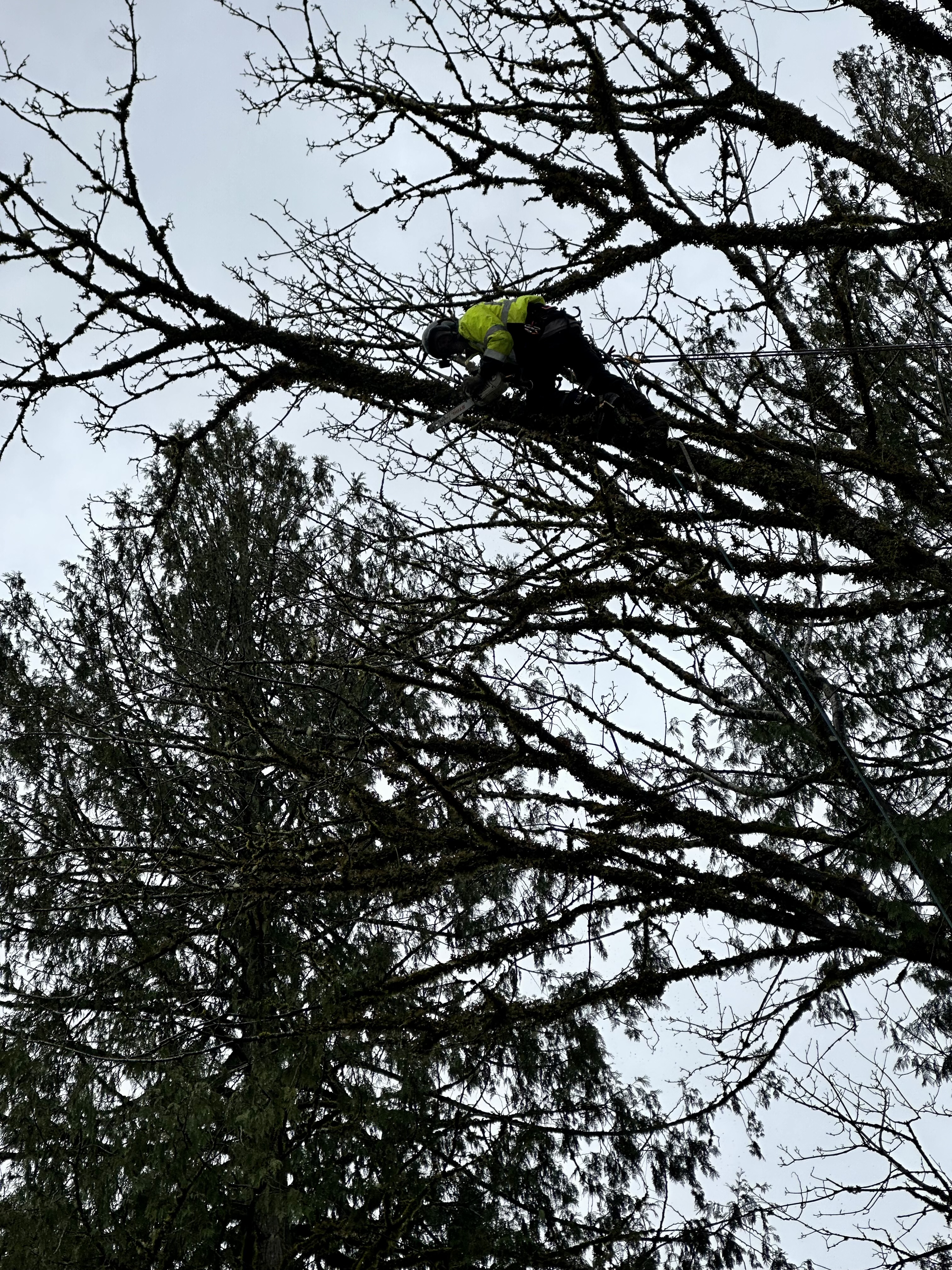
- Not always. Small to medium trees can often be pruned from the ground using pole saws and hand pruners. Large trees — especially conifers over 40 feet — require a climber to access the upper canopy safely. We use climbing spurs only on trees being removed, never on trees we are preserving.
Keep Your Trees Healthy and Your Property Safe
K&J Tree Works provides professional tree trimming across Snohomish and King County. We follow ISA pruning standards, respect your trees, and leave your property clean. Call (425) 223-7904 or request a free estimate online. Monday through Saturday, 8 AM to 5 PM.