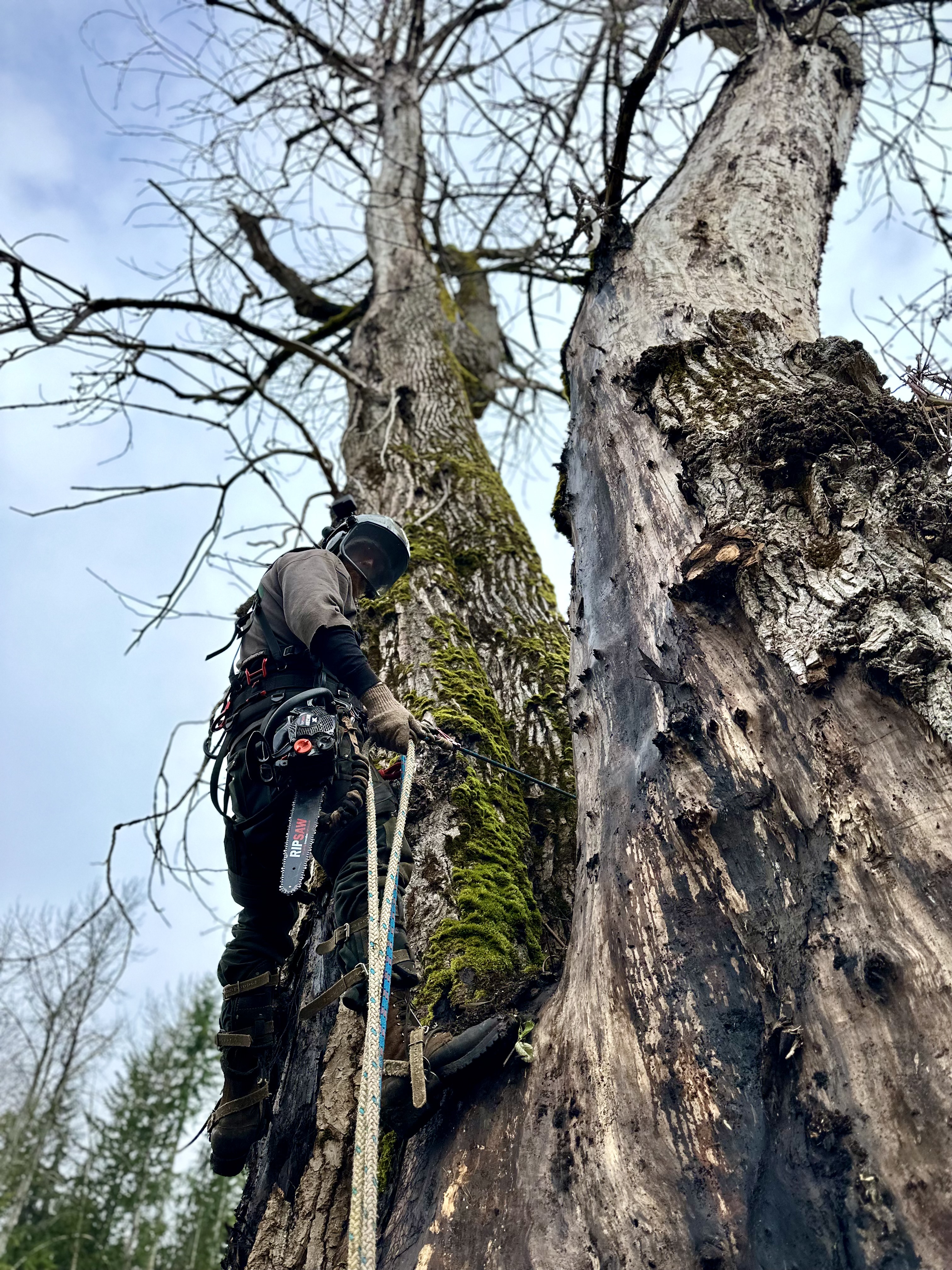
Tree Removal vs Trimming: Which Do You Need?
Snohomish, WA — March 22, 2026
A side-by-side comparison of tree removal and tree trimming to help Snohomish County homeowners decide which service their property actually needs.
How Do You Know If a Tree Needs Trimming or Removal?
tree removal and tree trimming in Snohomish County, Washington are the two most common tree services homeowners request — but they solve very different problems. Tree trimming preserves a healthy tree by selectively removing branches, while tree removal eliminates the entire tree. The right choice depends on the tree's health, structural condition, location, and your goals for the property. This guide breaks down both services so you can make an informed decision — or know what to ask when a professional assesses your tree.
- Trimming keeps healthy trees safe, shapely, and away from structures
- Removal eliminates trees that are dead, dangerous, or in the wrong location
- A professional assessment prevents costly mistakes in either direction
- Both services require licensed, insured crews for safety
Tree Removal vs Tree Trimming: Side-by-Side
Here is a direct comparison of tree removal and tree trimming to help you understand which service fits your situation. Both are common on Snohomish County properties with mature Douglas fir, western red cedar, and big leaf maple.
Tree Removal
Complete removal of the entire tree from your property. The tree is cut down, dismantled, and cleared.
- Used when a tree is dead, severely damaged, or structurally unsound
- Necessary when a tree is too close to structures and cannot be managed with trimming
- Required for land clearing, construction, and property development
- Cost: $800 to $4,000+ depending on tree size, access, and complexity
- Timeline: 2 to 8 hours for most residential removals
- Permanent solution — the tree is gone
Choose removal when the tree cannot be saved or when it poses an ongoing hazard that trimming cannot address.
Tree Trimming
Selective removal of branches to improve health, structure, clearance, and safety while preserving the tree.
- Used on healthy trees that need maintenance, shaping, or clearance
- Reduces storm damage risk by removing dead branches and thinning the canopy
- Improves light, views, and clearance from structures without losing the tree
- Cost: $300 to $1,500 per tree depending on size and scope
- Timeline: 1 to 4 hours per tree for most residential trimming
- Needs to be repeated every 3 to 5 years as the tree continues to grow
Choose trimming when the tree is fundamentally healthy but needs professional care to stay safe and manageable.
The Bottom Line: If you are unsure, a professional assessment is the fastest way to determine the right approach. K&J Tree Works provides free on-site assessments and will tell you honestly whether trimming or removal is the better option for your specific tree.
5 Signs Your Tree Needs Removal, Not Trimming
Some trees are past the point where trimming will help. Here are the clearest signs that removal is the right call:
- More Than 50% Dead Crown: A tree with over half its canopy dead or dying is in terminal decline. Trimming removes dead branches but does not restore a dying tree — it just delays the inevitable while the tree continues to shed branches.
- Trunk Decay or Hollow Core: Large cavities, soft or punky wood at the base, and fungal conks (shelf fungi) growing from the trunk indicate structural decay. A tree can be hollow and still standing, but it cannot withstand the wind loads that Pacific Northwest storms deliver.
- Root System Failure: Heaving soil, exposed roots on the lean side, or a new lean that appeared after a storm indicate root failure. No amount of trimming addresses root problems.
- Growing Into Power Lines Repeatedly: Some trees regrow into utility lines within a year or two of trimming. If trimming is a recurring expense and the tree keeps growing back into the same problem, removal is the more practical long-term solution.
- Foundation or Infrastructure Damage: Roots cracking foundations, lifting sidewalks, invading sewer lines, or damaging septic systems cannot be managed by trimming the canopy. Root barriers work in some cases, but for large trees with extensive root systems, removal is often the only permanent solution.
5 Signs Your Tree Needs Trimming, Not Removal
Many trees that homeowners think need removal can actually be managed effectively with professional trimming:
- Dead Branches But a Healthy Canopy: Scattered dead branches in an otherwise green, full canopy are normal — especially in mature conifers. Crown cleaning removes the dead wood and the tree continues to thrive.
- Branches Touching Your Roof: Branches rubbing against your roof, siding, or gutters cause damage over time, but the tree itself may be perfectly healthy. Clearance pruning solves the problem without removing the tree.
- Blocking Light or Views: A dense canopy that blocks sunlight or views can be thinned or raised to restore light and sight lines while preserving the tree's presence on your property.
- Overgrown But Structurally Sound: A tree that has simply gotten too big can often be managed with crown reduction — reducing height and spread by cutting back to lateral branches. This is different from topping, which damages the tree.
- Storm Damage to Branches Only: If a storm broke branches but left the trunk and root system intact, cleanup trimming removes the damage and the tree recovers. Most healthy trees survive the loss of 25 to 30 percent of their canopy.
Cost Comparison: Trimming vs Removal in Snohomish County
Understanding the cost difference helps you budget appropriately and evaluate quotes from tree services:
- Trimming Costs: Professional trimming in Snohomish County ranges from $300 for small ornamental trees to $1,500 for large conifers requiring a climber and chipper. Most residential trees fall in the $400 to $800 range. Multi-tree discounts typically apply.
- Removal Costs: Tree removal ranges from $800 for small, accessible trees to $4,000+ for large trees near structures requiring complex rigging. Most residential removals fall in the $1,000 to $2,500 range.
- Long-Term Cost Perspective: Trimming every 3 to 5 years costs less per visit than a single removal — but over 20 years, a tree trimmed four or five times may cost as much as removal. If the tree adds value to your property (shade, beauty, privacy), trimming is usually worth the ongoing investment. If it is a liability, removal saves money long-term.
How We Assess Whether a Tree Needs Trimming or Removal
When you call K&J Tree Works for an assessment, here is what we evaluate to recommend the right approach:
- Overall Health Check: We look at the canopy fullness, leaf color and size, presence of deadwood, and signs of disease or pest damage. A tree with 70 percent or more healthy canopy is usually a trimming candidate.
- Structural Assessment: We inspect the trunk for cracks, cavities, decay, and lean. We check the root flare for signs of root failure. We evaluate branch attachments for weak forks and included bark. Structural issues often point toward removal.
- Site Context: We consider the tree's proximity to structures, utilities, and property boundaries. A healthy tree in a good location is worth maintaining. A healthy tree in a terrible location — growing into your foundation or blocking essential access — may still warrant removal.
- Honest Recommendation: We tell you what we find and what we recommend — trimming, removal, or sometimes just monitoring. We do not push removal when trimming will work, and we do not recommend trimming when the tree is a genuine hazard. You get a written quote for whichever service is appropriate.
Tree Removal vs Trimming: Common Questions
- Can trimming prevent a tree from eventually needing removal?
- In many cases, yes. Regular crown cleaning and structural pruning keep trees healthier and more resilient. A well-maintained tree is less likely to develop the kind of problems that lead to removal. However, trimming cannot prevent all tree failures — root disease, soil changes, and severe storm damage can affect even well-maintained trees.
- Should I get a second opinion before removing a tree?
- If you are unsure about a removal recommendation, getting a second assessment is reasonable. Look for a crew that is licensed and insured and willing to explain their reasoning. Be cautious of any company that pushes removal without a clear explanation of why trimming is not sufficient.
- My tree was topped years ago. Can it be fixed with trimming?
- Topped trees develop dense clusters of weakly attached shoots at each topping cut. A skilled arborist can selectively thin this regrowth and select dominant leaders to restore some structural integrity. However, topped trees never fully recover their original form or strength. In many cases, the long-term prognosis for a topped tree is poor, and eventual removal is likely.
- How do I know if a tree company is recommending unnecessary removal?
- Red flags include a company that recommends removing every tree they look at, one that will not explain why trimming is not an option, or one that offers to remove a tree on the spot without a written quote. A reputable company explains the tree's condition, presents options, and gives you time to decide.
Not Sure Whether to Trim or Remove? We Will Tell You.
K&J Tree Works provides free, no-pressure assessments for homeowners throughout Snohomish County. We will evaluate your tree, explain what we find, and recommend the right approach — trimming, removal, or monitoring. Call (425) 223-7904 or request an estimate online. Monday through Saturday, 8 AM to 5 PM.