Wood & Debris Cleanup for Western Washington
King County, WA — March 18, 2026
A practical guide to wood and debris cleanup in western Washington — covering storm aftermath, routine yard waste, disposal rules by area, DIY vs professional cleanup, and how to prevent future buildup.
Storm Debris vs Routine Cleanup: Different Messes, Different Approaches
Not all debris cleanup is the same. The source of the mess determines how urgent it is, whether insurance might cover it, and what approach makes the most sense. If a tree fell on your house or another structure, start with our storm tree and insurance guide for safety steps and what policies usually cover. The common types of cleanup:
- Post-Storm Cleanup: After Pacific Northwest windstorms, atmospheric rivers, or heavy snow events, properties can be littered with downed branches, snapped treetops, and full-tree failures. Storm debris cleanup is urgent because it may block access, create safety hazards, or indicate additional trees at risk of failure. Insurance usually helps only when a storm tree damages your home or another covered structure; cleanup of trees that hit nothing usually is not covered.
- Accumulated Brush and Wood Piles: Years of pruning, wind-dropped branches, and general yard maintenance can create large brush and wood piles. These are not urgent but they attract rodents, harbor insects, and become fire hazards in dry summers. Properties in rural Sultan, Monroe, Arlington, and Granite Falls commonly accumulate these piles.
- Post-Removal Cleanup: Sometimes a tree service removes trees but leaves the mess — or leaves more than you expected. Piles of logs, brush heaps, and scattered chips from a previous company's work are a common reason homeowners call us.
- Construction and Renovation Debris: Building projects generate brush, stumps, and vegetation waste that needs to go somewhere. This is not covered by our service — we handle natural wood and brush only, not construction waste.
What to Keep, What to Chip, and What Goes to the Dump
Before a cleanup crew arrives, it helps to know what your options are for all that material:
- Firewood-Quality Wood: Douglas fir, big leaf maple, red alder, and madrone all make excellent firewood. If you heat with wood or have a fire pit, ask your crew to buck trunk sections into 16- to 18-inch rounds and stack them. Alder and maple need 6 to 12 months of seasoning; fir can be burned sooner. Many homeowners in Sultan, Gold Bar, Darrington, and the rural communities keep firewood from cleanup jobs.
- Landscape Chips: Chipped branches and smaller wood make excellent mulch for garden paths, flower beds, and weed suppression. Fresh chips are best used in paths and around established plants — avoid putting fresh chips directly against vegetable garden beds or young transplants, as they temporarily tie up nitrogen as they decompose.
- Material for Disposal: Rotten wood, invasive species (like English ivy or blackberry canes), and material too small to chip effectively goes to the dump. Both Snohomish and King County operate transfer stations that accept yard waste.
Yard Waste Disposal Rules by Area
Where your property debris ends up depends on your location and what your municipality offers:
- Snohomish County Transfer Stations: Snohomish County Solid Waste operates transfer stations in Everett, Marysville (Haz-waste), and other locations that accept yard waste. Self-haul yard waste is typically $20 to $40 per load depending on volume. Curbside yard waste collection is available in most incorporated cities.
- King County Transfer Stations: King County operates transfer stations throughout the county that accept clean wood waste and yard debris. Self-haul rates are comparable to Snohomish County. Most King County cities provide curbside green waste collection.
- Burning Regulations: Outdoor burning of yard debris is regulated differently across the region. Unincorporated Snohomish County generally allows permitted burning during designated burn seasons. Most cities in both counties prohibit outdoor burning entirely. King County unincorporated areas have mixed rules — check with the Puget Sound Clean Air Agency for current restrictions.
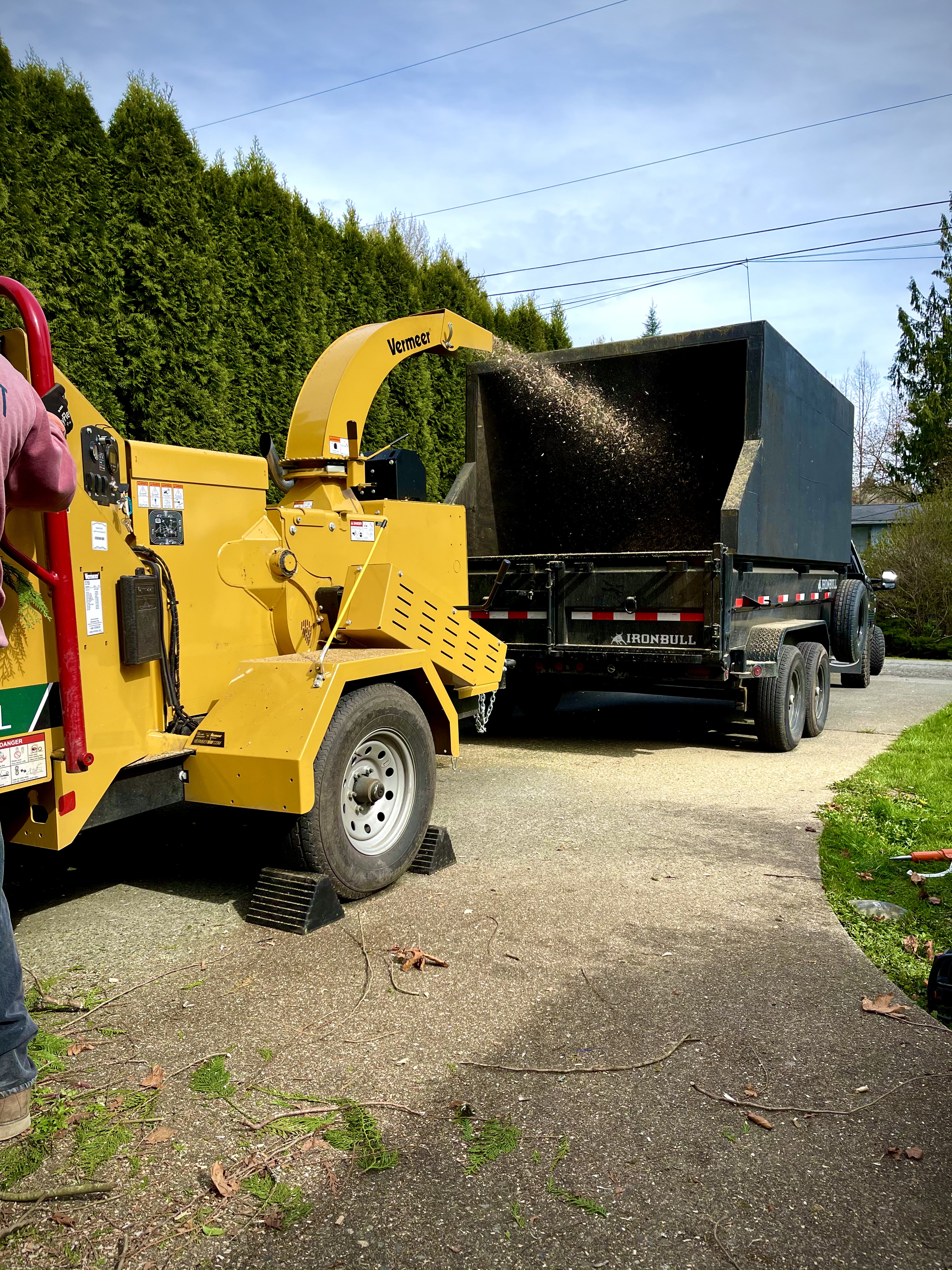
- Professional Hauling: When K&J Tree Works handles your cleanup, we haul all material. Chippable wood goes through our chipper on-site. Trunk wood is bucked and removed. You do not need to worry about transfer station trips, load limits, or sorting — we handle all of it.
DIY Cleanup vs Hiring a Crew: When It Makes Sense to Call
Not every cleanup job requires a professional crew. Here is a practical breakdown of when DIY works and when calling a crew saves you time, money, and risk:
- DIY Makes Sense When: The debris is small branches and brush you can handle by hand, you have a way to haul it (truck or trailer), the material is on flat ground with easy access, and there are no standing dead trees or hanging branches overhead. A weekend with a chainsaw, a rake, and a few trips to the transfer station can handle a normal year's worth of yard debris.
- Call a Crew When: The debris includes large trunk sections you cannot safely cut or move, branches are tangled in standing trees or hung up overhead, the cleanup requires a chipper to manage the volume, the material is on a slope or in an area with difficult access, or you simply have more volume than you can handle in a reasonable timeframe.
- Safety Considerations: Storm-damaged trees and fallen debris often have branches under tension that can spring violently when cut. Overhead hanging branches (widowmakers) can fall without warning. If the cleanup involves anything overhead or under tension, call a crew. It is not worth the risk.
Preventing Future Debris Buildup on Your Property
The best cleanup is the one you do not need. Here is how to reduce the amount of debris your property generates each year:
- Regular Crown Cleaning: Having dead and broken branches removed from your trees every 3 to 5 years dramatically reduces the amount of debris that falls during storms. Crown cleaning is the most cost-effective preventive tree care investment.
- Remove Standing Dead Trees: Dead trees shed branches constantly and eventually fall entirely. Removing dead trees before they deteriorate saves money compared to emergency cleanup after they fall — and eliminates years of falling-branch hazards.
- Manage Fast-Growing Species: Red alder, cottonwood, and willow produce enormous amounts of woody debris as they age. These species are relatively short-lived and become increasingly fragile after 30 to 40 years. If you have aging specimens near your home, proactive removal prevents years of cleanup headaches.
- Annual Fall Inspection: Walk your property each fall before storm season begins. Look for dead branches, hanging debris caught in canopies, and trees with new lean or visible decline. Addressing issues before winter storms reduces both emergency calls and spring cleanup volume.
How We Handle Wood and Debris Cleanup
Our cleanup process is efficient and thorough — we leave your property cleaner than we found it:
- Volume and Access Assessment: We assess the total volume of material, identify any safety hazards (hanging branches, unstable debris piles), and determine the best equipment positioning for efficient cleanup.
- Hazard Mitigation: Before ground-level cleanup begins, we address any overhead hazards — hanging branches, partially broken limbs, or standing dead material that could fall during the cleanup process.
- Chipping and Processing: Brush and branches are fed through our chipper on-site. Trunk wood is bucked into manageable sections. You choose whether to keep firewood rounds and chips or have everything hauled away.
- Site Restoration: We rake the cleanup area, blow debris from hard surfaces, and leave the property in clean, usable condition. For storm damage sites, we also point out any remaining trees that show signs of stress or damage from the same event.
Wood and Debris Cleanup: Common Questions
- How much does debris cleanup cost?
- Professional cleanup ranges from $300 for a small yard cleanup to $2,500+ for large storm-damage sites. Cost depends on volume, access, and whether material is kept or hauled. We provide free on-site estimates so you know the cost before any work begins.
- Will insurance cover storm debris cleanup?
- Often only when a storm tree damages your home or another covered structure. Many policies have a separate, smaller limit for cutting up and hauling the wood away, and some also cover removal when a tree blocks a driveway or accessibility ramp. Cleanup of branches and trees that fell without hitting anything usually is not covered. Document the damage from a safe spot, check your policy and contact your insurer promptly.
- Can you clean up someone else's tree removal job?
- Yes. We regularly clean up after other companies that left brush piles, log rounds, or incomplete cleanup. If you had trees removed but the site was not left to your satisfaction, we will finish the job.
- What about invasive species removal?
- We remove invasive woody vegetation like blackberry and English ivy as part of clearing and cleanup projects. For comprehensive invasive species management, we recommend consulting a restoration specialist who can advise on replanting and long-term control.
Need a Property Cleaned Up? We Handle It.
K&J Tree Works provides wood and debris cleanup across Snohomish and King County — from post-storm emergency cleanup to routine property maintenance. Call (425) 223-7904 or request a free estimate online. Monday through Saturday, 8 AM to 5 PM.