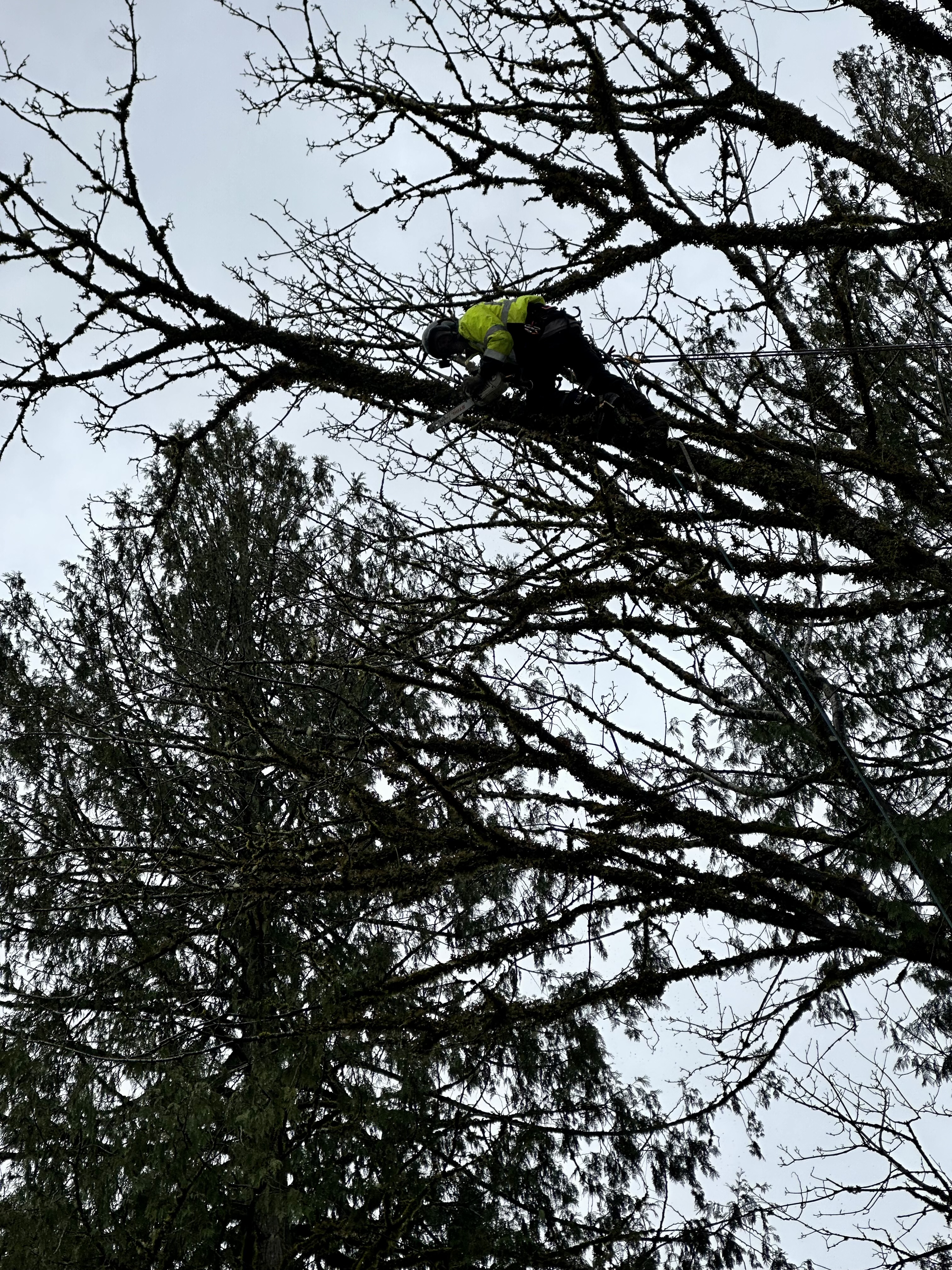
Winery, Vineyard, and Septic Field: Tree Management on Woodinville's Rural Estate Properties
Woodinville, WA — April 27, 2026
Tree work on a Woodinville estate or winery property is a different job than tree work on a quarter-acre suburban lot. Vineyards, tasting room operations, septic drain fields, irrigation lines, and riparian buffers all change how we sequence the work and what we have to protect.
Why Are Woodinville's Estate and Winery Properties a Different Kind of Tree Job?
Woodinville sits in the Sammamish River valley at roughly 30 feet elevation, with the wine district concentrated along the valley floor and the residential neighborhoods rising into the hills on both sides. The defining feature of estate-scale tree work here is what is on the ground around the trees: rows of vines on careful spacing, irrigation drip lines tracing every row, septic drain fields that must not be driven over, tasting-room patios and event spaces with valuable furnishings, and the riparian buffer along the Sammamish River and Little Bear Creek where city regulations limit what can be done close to the water. A single 80-foot Douglas fir removal that takes half a day on a typical suburban lot can take a full day on a winery property because of the staging, protection, and coordination required. Multi-tree estate jobs run multi-day with detailed sequencing of which trees come down on which day, where wood gets stacked, and when chipper noise is acceptable relative to tasting-room operations. Done right, the property looks untouched when the crew leaves except for the missing trees. Done poorly, the homeowner is repairing irrigation lines and the tasting room is dealing with a parking lot full of wood chips during a Saturday tasting.
- Woodinville's wine district along the Sammamish River valley combines vineyards, tasting rooms, and event spaces with mature trees
- Septic drain fields on rural estate lots cannot be driven over without serious repair cost
- The Sammamish River and Little Bear Creek riparian buffers limit tree work close to the water
- Multi-tree estate jobs require sequencing that suburban work does not
How Tree Roots and Septic Drain Fields Conflict on Rural Lots
Most rural Woodinville properties run on septic systems with drain fields somewhere on the lot. Tree decisions and septic decisions are linked more directly here than most homeowners realize:
- Water-Seeking Species in the Drain Field: Red alder, black cottonwood, willow, and to a lesser extent western red cedar are all drawn to the consistent moisture and nutrients in a drain field. Their roots invade the distribution lines, find the gravel layers, and over a period of years can choke the system enough to require partial or complete drain field replacement at significant cost. When we see these species growing within 30 feet of a drain field, we typically recommend removal before the system fails.
- Setback Distance Recommendations: Industry guidance suggests keeping trees with aggressive root systems at least 30 to 50 feet from the drain field — more for larger species. Many older Woodinville rural homes were built before this guidance was widespread, and the trees retained around the home in the 1970s and 1980s are now well inside the recommended setback. Removal is often the right answer; root pruning combined with a root barrier installation can sometimes buy more time on lower-risk species.
- How We Read a Drain Field Before Working Near It: Before staging equipment near a known drain field, we walk the area, look for septic risers and inspection ports, and confirm the drain field's footprint with the homeowner. We never drive equipment over the field, and we plan rigging from outside the field's footprint even when that means longer drag lines or repositioning.
- Scheduling Tree Removal With Septic Repairs: When a drain field needs repair or replacement and there are nearby trees in the way, the most efficient path is usually to coordinate the tree work with the septic contractor. Trees come down before excavation; root removal happens with the field opened up; replacement planting goes in afterward at safe distances. We are happy to coordinate timing with septic contractors on combined jobs.
Working Around Vineyards, Tasting Rooms, and Event Spaces
Tree work on a winery property requires protecting infrastructure that does not exist on a typical residential job:
- Vineyard Row Protection: Vine rows are planted on tight spacing — typically 6 to 8 feet between rows — and the trellis posts, drip irrigation, and trellis wire are all easily damaged by falling branches or careless equipment movement. We lay protective matting along rows that may be in the rigging fall zone, and we never stage chipper trucks or rigging anchors inside vineyard rows.
- Drip Irrigation Line Awareness: Drip irrigation runs along most vineyard rows and often extends to ornamental landscape areas around tasting rooms. The lines are usually shallow and easily cut by chipper feed lines or by dragging brush across them. We map line locations with the property manager before staging any drag routes.
- Tasting Room and Patio Coordination: Tasting rooms generate steady visitor traffic, especially on weekends. Tree work that involves chipper noise, cherry pickers, or partial parking lot closure has to be scheduled around tasting hours. Most winery properties prefer Tuesday through Thursday work outside peak tasting hours; some prefer the December through February off-season window when visitor traffic is lowest.
- Event Space Calendar Coordination: Wineries that host weddings and corporate events tend to have detailed event calendars that influence when tree work can happen. We coordinate scheduling with the event manager so equipment, debris, and noise do not collide with planned events.
Sammamish River and Little Bear Creek: Riparian Considerations on Woodinville Estates
The Sammamish River runs north-to-south through the Woodinville wine district, and Little Bear Creek crosses many properties on its way to the river. Trees within the riparian buffer of either watercourse fall under city critical-area regulations:
- Buffer Width and What It Includes: Woodinville's critical-area regulations establish riparian buffers along the Sammamish River and Little Bear Creek, with buffer widths varying by reach and channel classification. Trees inside the buffer typically require city review before removal, with exceptions for genuine hazard trees. We check the city critical-area mapping for any property within a few hundred feet of either watercourse before quoting.
- Red Alder Lifecycle Along the River: Red alder dominates much of the Sammamish River corridor and reaches structural failure age (40 to 60 years) on a predictable cycle. Many of the alders along the river through the wine district were established when housing developments expanded in the 1980s and 1990s and are now reaching the end of their stable lifespan. Aging alders that drop limbs onto vineyard infrastructure or threaten tasting room buildings are a steady removal request.
- Cottonwood Failure Patterns: Black cottonwood along the river produces large, fast-growing trees that drop heavy limbs without warning and that fail entirely after 60 to 80 years. Cottonwoods overhanging tasting room patios, event lawns, or the Sammamish River Trail get regular crown assessment to catch decline before it becomes a hazard.
- Replacement Planting Inside Buffer: When the city approves removal of a buffer tree, replacement planting is often a condition of approval. Native species — Pacific willow, western red cedar, big leaf maple — are typically required, with specific size and placement standards. We coordinate replacement planting with the approval condition rather than leaving it as a separate obligation.
How We Sequence a Multi-Tree Estate Removal in Woodinville
Estate-scale tree work runs as a planned project rather than a single job. Our sequence on a typical multi-tree Woodinville estate removal:
- Comprehensive Property Walk and Tree Map: On the first visit, we walk the property with the owner or property manager, identify every tree on the work list, and map them against vineyard rows, tasting room footprint, event spaces, septic field locations, and driveway access. We deliver a written project plan that shows which trees come down in which sequence and which protections go in place where.
- Critical-Area and Permitting Check: Before quoting, we cross-check the property against city critical-area mapping. Trees inside the Sammamish River or Little Bear Creek buffer go through city review; trees outside the buffer can typically proceed on standard scheduling.
- Pre-Job Infrastructure Protection: Before any cutting, we lay protective matting along vineyard rows and drag paths, mark septic field boundaries, identify drip irrigation line locations, and confirm staging and access points with the property manager.
- Day-by-Day Sequenced Removal: Multi-tree removals typically run 2 to 5 days with specific trees scheduled for specific days. Wood and chip handling is staged so that completed sections look clean each evening rather than the entire property looking like a job site for the duration of the project.
- Final Walkthrough and Punch List: On the last day, we walk the property with the owner or manager and address any remaining items — small debris in vineyard rows, irrigation line check, replacement planting placement. Estate-scale work calls for a final walkthrough; we build that into every multi-day project.
Woodinville Estate and Winery Tree Care Questions We Hear Most
- Can you do tree work on my Woodinville winery without disrupting tasting room operations?
- Yes, with planning. We typically schedule winery work for Tuesday through Thursday outside peak tasting hours, or during the December through February off-season when visitor traffic is lowest. We coordinate equipment staging, chipper operation, and any temporary parking impact with the property manager so the public-facing parts of the property stay functional.
- How do you protect vineyard rows during tree removal?
- We lay protective matting along rows that fall inside the rigging zone, never stage equipment inside vine rows, and rig branches and trunk sections to come down outside the rows. Drip irrigation line locations are mapped and avoided in drag paths. The goal is zero damage to vines, trellis, or irrigation infrastructure.
- We have a septic drain field with alders growing in it — what should we do?
- Remove the alders before they cause drain field failure. Alder roots are aggressive in drain fields and will eventually choke the distribution lines. Removal before failure is dramatically less expensive than drain field repair or replacement after the system fails. We can coordinate the removal with a septic inspection if you want to confirm the system is currently sound.
- Does Woodinville require permits for tree work near the Sammamish River?
- Trees within the city's critical-area buffer along the Sammamish River or Little Bear Creek typically require city review before removal, with exceptions for documented hazard trees. Replacement planting is often required as a condition of approval. We check the critical-area mapping for any property within a few hundred feet of either watercourse before quoting and walk you through what the city will likely require.
- How much does a typical multi-tree estate removal cost in Woodinville?
- Multi-tree estate removals are priced as projects rather than per-tree because of the staging, protection, and sequencing required. A 5- to 10-tree project on a winery property with vineyard and tasting room considerations typically runs $8,000 to $20,000 over 2 to 5 days depending on tree sizes, access, and infrastructure protection requirements.
Estate or Winery Tree Project in Woodinville?
K&J Tree Works has worked on winery properties, rural estates, and suburban lots across Woodinville — from the wine district along the Sammamish River to the residential hillsides in Wellington and Cottage Lake. We provide free on-site assessments and detailed project plans for multi-tree estate work. Call (425) 223-7904 or request an estimate online. Monday through Saturday, 8 AM to 5 PM.