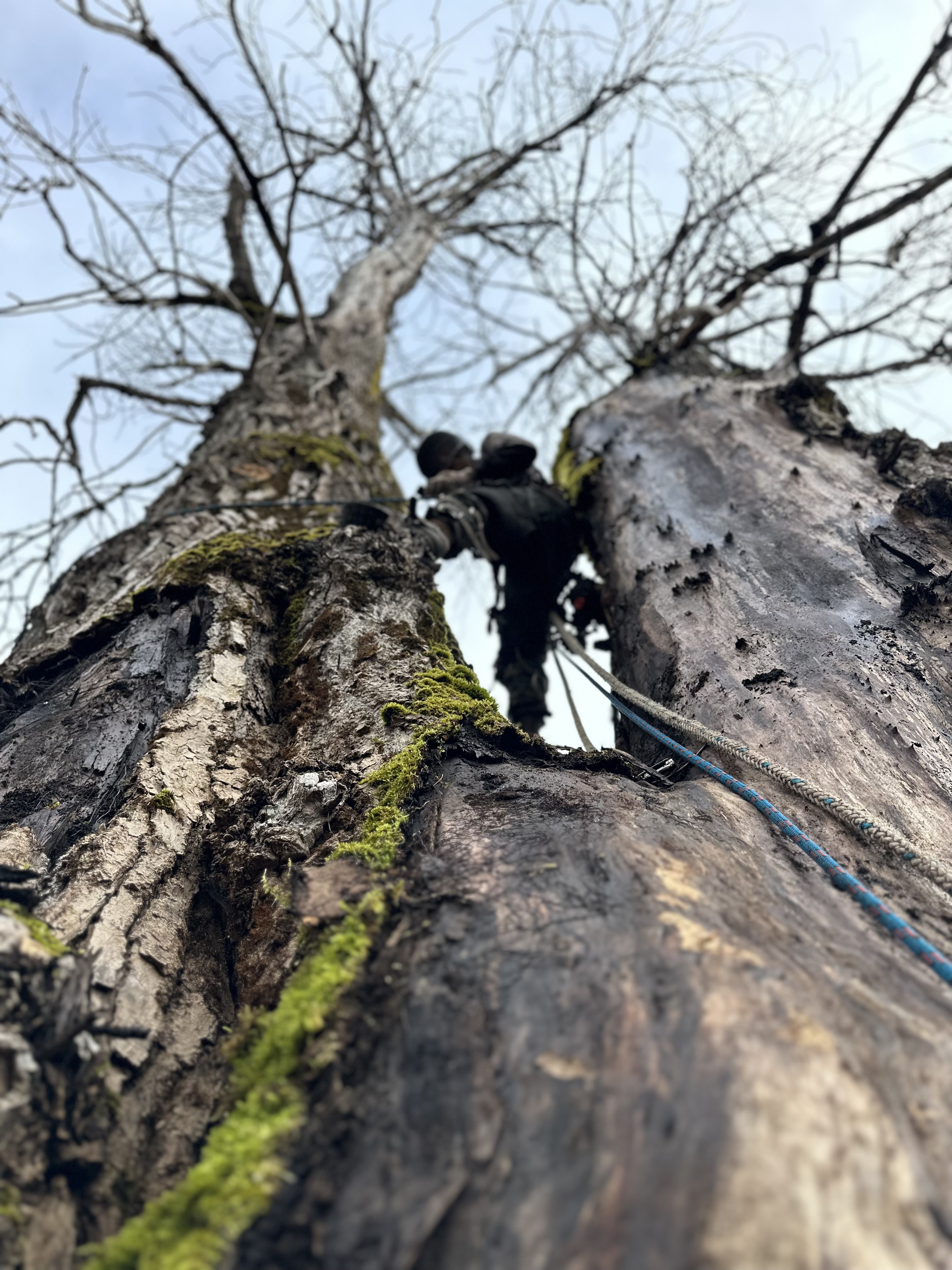
Valley Floor to Foothills: Tree Challenges Across Monroe's Diverse Terrain
Monroe, WA — April 10, 2026
Monroe's geography ranges from the flat Skykomish River valley floor to foothill terrain at 500+ feet elevation. Each zone creates distinct tree challenges that homeowners should understand.
Why Does Monroe's Terrain Create Different Tree Problems?
Monroe sits where the Skykomish River exits the Cascade foothills and enters the broad lowland plain that stretches west toward Puget Sound. The downtown core and neighborhoods along Main Street, Lewis Street, and the Highway 2 corridor sit on the valley floor at 50 to 100 feet elevation on deep alluvial soils deposited by thousands of years of river flooding. East of Woods Creek Road and south along Old Owen Road, the terrain rises sharply into Cascade foothill ridges at 300 to 500+ feet, where glacial till and weathered bedrock replace river sediment. This topographic split runs right through Monroe's residential areas. A homeowner on Kelsey Street near the river faces completely different tree issues than a homeowner on Chain Lake Road in the foothills — different species, different soils, different failure modes, and different access conditions for tree crews.
- Monroe's valley floor (50-100 ft elevation) has flood-influenced alluvial soils and moisture-loving trees
- Foothill areas east of Woods Creek Road (300-500+ ft) have glacial till and dense conifer stands
- The two zones create completely different tree failure patterns and management needs
- Access conditions range from flat residential streets to steep gravel roads on hillside parcels
What Tree Challenges Do Valley Floor Properties Face in Monroe?
Properties on Monroe's valley floor along the Skykomish River and its tributaries deal with tree issues driven by water, soil saturation, and fast-growing species:
- Saturated Clay Soils and Root Instability: The alluvial soils along Monroe's valley floor contain heavy clay layers that hold water for months during the wet season. Tree roots in these soils spread laterally rather than deeply because oxygen levels drop below 18 inches during winter saturation. This creates wide but shallow root plates that are vulnerable to windthrow — especially in Douglas fir and western red cedar that carry enormous canopy weight. The November 2024 atmospheric river event toppled several large conifers in Monroe's valley neighborhoods precisely because their root plates could not grip saturated clay.
- Black Cottonwood Invasion Along Waterways: Cottonwood is the dominant colonizer along the Skykomish River, Woods Creek, and the drainage channels through Monroe's valley floor. Cottonwood grows 6 to 8 feet per year in Monroe's fertile alluvial soil, reaching 80 to 100 feet in 15 to 20 years. Properties along Tester Road and the Skykomish River Park area often have cottonwoods that were seedlings 15 years ago and are now towering over homes, dropping brittle branches and releasing cottony seeds that clog gutters and HVAC systems every June.
- Red Alder Overcrowding: Red alder thrives in Monroe's valley floor conditions and grows in dense stands that crowd out other species. Alder is relatively short-lived — most begin declining after 40 to 50 years — and when they deteriorate, they fall unpredictably because their wood is soft and splits easily. Properties with 40-year-old alder stands face a cascade of tree failures as the stand reaches the end of its lifespan simultaneously.
- Flood Zone Regulations: Some Monroe valley floor properties fall within FEMA flood zones along the Skykomish River. Tree removal in flood zones and riparian buffers may be subject to Snohomish County critical areas regulations, which restrict clearing near waterways. We help Monroe property owners understand which regulations apply to their specific parcels before planning any work.
What Tree Issues Affect Monroe's Foothill Properties?
Foothill properties in Monroe's eastern areas present a different set of challenges driven by terrain, dense conifer stands, and limited access:
- Dense Second-Growth Conifer Stands: Monroe's foothill areas were logged in the early 1900s and have since grown back as dense second-growth Douglas fir and western hemlock stands. These trees are now 80 to 120 years old and 100 to 140 feet tall, often growing at stem densities that prevent healthy crown development. When individual trees are removed — for home sites, driveways, or utility clearance — the remaining trees are suddenly exposed to wind they have never experienced. This windthrow risk is the most common reason we are called to foothill properties after initial clearing.
- Steep Terrain and Slope Stability: Foothill lots along Old Owen Road, Paradise Lake Road, and Chain Lake Road can have slopes exceeding 30 percent grade. Removing trees on steep slopes requires careful assessment of how tree roots are contributing to slope stability. On Monroe's glacial till soils, which are a mix of sand, gravel, and clay, tree root networks often provide the primary erosion control on steep faces. We assess slope conditions and recommend staged removal rather than wholesale clearing on hillside parcels.
- Limited Access for Equipment: Many foothill properties in Monroe are accessed by narrow gravel roads, single-lane driveways, or easement roads shared with multiple property owners. Getting a chipper, log truck, and crew vehicles to the work site can be the most complex part of the job. We scout access routes before quoting and factor in hand-carrying distance for debris when vehicle access is limited.
- Well Water and Septic Considerations: Foothill properties in Monroe often rely on private wells and septic systems rather than city water and sewer. Large tree roots can infiltrate septic drain fields and well casings. When planning tree removal near these systems, we cut at grade and avoid stump grinding that could damage underground infrastructure. We also consider how removing a large tree's water uptake changes the moisture balance around drain fields.
How Do We Approach Tree Work Across Monroe's Different Terrains?
Our approach adapts to the specific conditions on each Monroe property:
- Terrain and Soil Assessment: We evaluate whether the property is on valley floor alluvial soil or foothill glacial till, because this determines root behavior, failure risk, and equipment options. Valley floor work may require working around saturated conditions, while foothill work may involve slope stability planning.
- Access Route Planning: For valley floor properties, access is usually straightforward through residential streets and driveways. For foothill properties, we assess road conditions, turning radius for our trucks, and identify staging areas for equipment. Sometimes we stage on a neighboring property or a road pullout and hand-carry equipment to the tree.
- Species-Specific Approach: Valley floor cottonwood and alder removals use different techniques than foothill conifer removals. Cottonwood is soft, brittle, and unpredictable when it falls. Dense foothill conifers require careful directional felling to avoid hitting neighboring trees. We match our cutting plan to the specific species and conditions.
- Post-Removal Windthrow Assessment: After removing trees — particularly on foothill properties with dense stands — we assess the remaining trees for new wind exposure risk. We recommend follow-up crown thinning on newly exposed trees to reduce their wind sail and lower the chance of windthrow in the next major storm.
Monroe Tree Service Questions
- Why do trees fall more often on Monroe's valley floor during storms?
- Monroe's valley floor has alluvial clay soils that become saturated during fall and winter rains. Tree roots in saturated soil lose their grip because the soil essentially becomes mud. When wind loads the canopy of a 100-foot Douglas fir or cottonwood growing in saturated clay, the root plate can shear out of the ground. Foothill properties with better-drained glacial soils experience fewer windthrow failures because roots can grip coarser soil particles even when wet.
- I cleared trees for a house site on my Monroe foothill property and now other trees are leaning — what happened?
- When you remove trees from a dense stand, the remaining trees lose the mutual wind protection they had from their neighbors. Trees that grew in a dense group have smaller root systems and thinner trunks than trees that grew in the open because they never needed to resist full wind force independently. This newly exposed vulnerability is called windthrow risk, and it is the most common post-clearing problem on Monroe foothill properties. We can reduce the risk by crown-thinning the exposed trees to lower their wind resistance.
- How much does tree removal cost on Monroe foothill properties versus valley floor?
- Valley floor removals in Monroe typically run $1,000 to $3,000 per tree because access is good, terrain is flat, and equipment can reach the tree. Foothill removals often run $1,500 to $4,500 because of access limitations, steep terrain that requires more rigging, and longer debris carry distances. The trees themselves are often similar sizes, but the site conditions drive the cost difference.
- Do I need permits to remove trees on my Monroe property?
- Within Monroe city limits, standard residential tree removal on developed lots generally does not require a permit unless the trees are in critical areas — wetland buffers, steep slopes over 33 percent, or stream corridors. Properties in unincorporated Snohomish County near Monroe follow county critical areas regulations. If your property borders Woods Creek, the Skykomish River, or any mapped wetland, check with Snohomish County Planning before removing trees.
- Should I remove the cottonwoods along the creek behind my Monroe property?
- It depends on their condition and location. Cottonwoods along waterways provide bank stabilization and shade that benefits water quality, so they may fall under riparian buffer regulations. However, if they are leaning toward your home, dropping large branches on your roof, or blocking drainage, management is appropriate. We can often address the hazard by removing specific leaning or damaged trees while leaving healthy cottonwoods that are not threatening structures.
Need Tree Work on Your Monroe Property?
Whether your property is on the valley floor or in the foothills, K&J Tree Works has the equipment and experience for Monroe's diverse terrain. We provide free on-site assessments throughout Monroe. Call (425) 223-7904 or request an estimate online. Monday through Saturday, 8 AM to 5 PM.